



Al Yazarah: How Ancestral Ingenuity Drew Life from the Land
Sharjah-10.2.2026
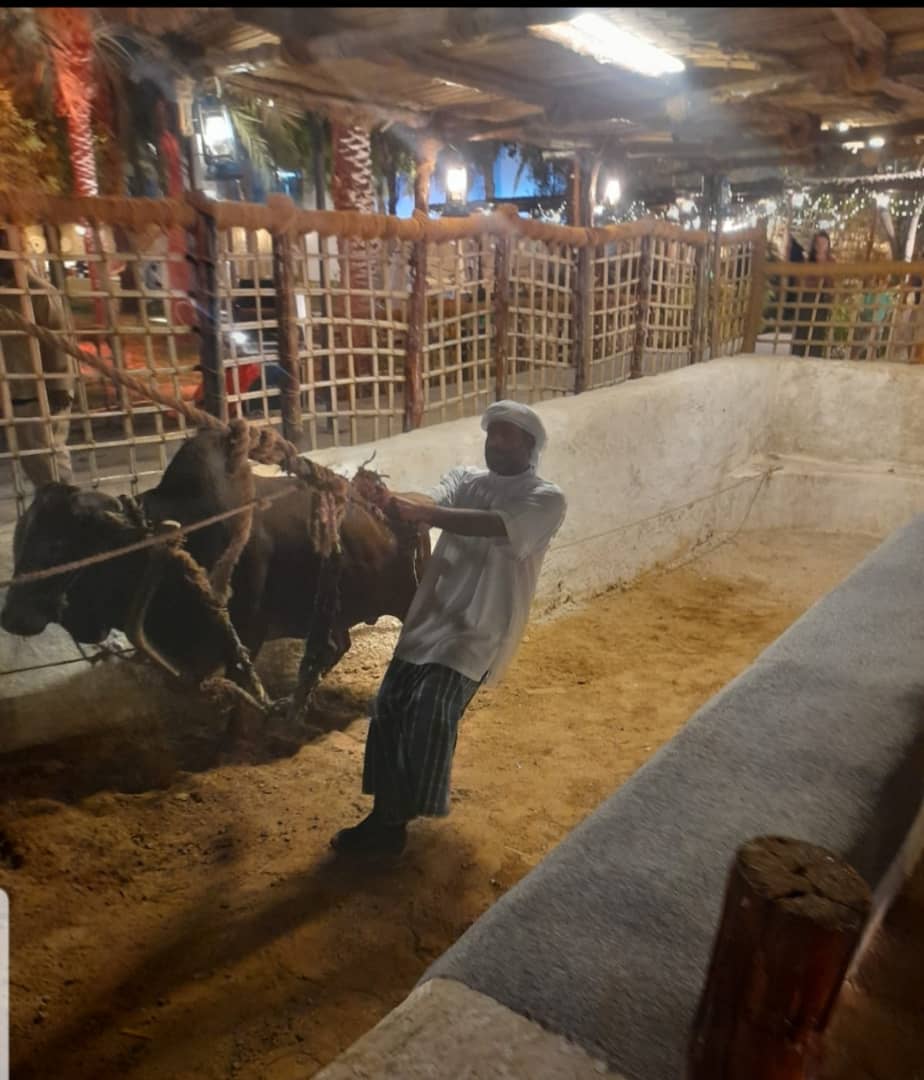
At Sharjah Heritage Days, heritage is not confined to display cases or distant memory. It lives, moves, and works. Among the most striking examples of this living legacy is Al Yazarah—the traditional irrigation system also known as the bull-powered water pump—a remarkable agricultural solution devised by ancestors to tame harsh environments and scarce water resources.
Rooted in the realities of desert life, Al Yazarah reflects an era when survival depended on innovation and harmony with nature. Designed to draw fresh water from wells and oases, the system once played a central role in irrigating crops and sustaining palm groves. Today, it stands as a testament to a complete agricultural ecosystem: from water management and food preservation to handcrafted tools and carefully regulated distribution—an enduring source of pride in the ingenuity of earlier generations.
One of the system’s most devoted guardians is Ali Yousef Al Shaaroun, an Emirati from Ras Al Khaimah and a pioneer in preserving the craft of Al Yazarah. He began practising the trade at just 17, dedicating his life to maintaining this traditional knowledge. Beyond working in palm farms, he made it his mission to pass the craft on to his children. Among them is Khamis Ali Yousef, who now oversees the Al Yazarah demonstration at the Agricultural Environment Pavilion.
Explaining how the system works, Khamis describes it as a form of ancient engineering refined through experience rather than textbooks. A well is dug, above which four tall palm trunks are erected to support a wooden pulley. This pulley eases the pulling of a strong rope, moved by a trained bull, to lift water from deep underground. Every component of Al Yazarah, he notes, is crafted by hand using natural materials.
At the heart of the system is the bull, selected with great care for strength and endurance and trained for nearly a month before work begins. Other key elements include the minyur, a circular wooden pulley; the dalu, a bucket made from animal hide to carry water; and the subi, rounded wooden pieces reinforced with iron to help lift the bucket smoothly from the well. A sturdy rope, known as the badin, connects to the zayour, which the yazer— the operator—uses to guide and encourage the bull.
But Al Yazarah is not only about mechanics. As the system turns, the minyur—the bull’s guide—chants traditional songs and work chants. Their rhythms blend with the creaking wood and moving rope, creating a distinctive soundscape that once filled farms and oases. These chants, Khamis explains, were essential in lifting spirits, maintaining energy, and sustaining long hours of labour under the sun.
Such live demonstrations, he says, are vital for helping younger generations understand the true value of traditional agricultural work. More than a farming tool, Al Yazarah represents a living memory—one that tells the story of the Emirati relationship with land and water, perseverance and patience. In bringing this system back to life, Sharjah Heritage Days ensures that this story continues to be heard, seen, and felt, not as a relic of the past, but as a vital part of national identity