


China at Sharjah Heritage Days… A Cultural Presence Deepening the Dialogue of Civilizations
Sharjah, 6 February 2026
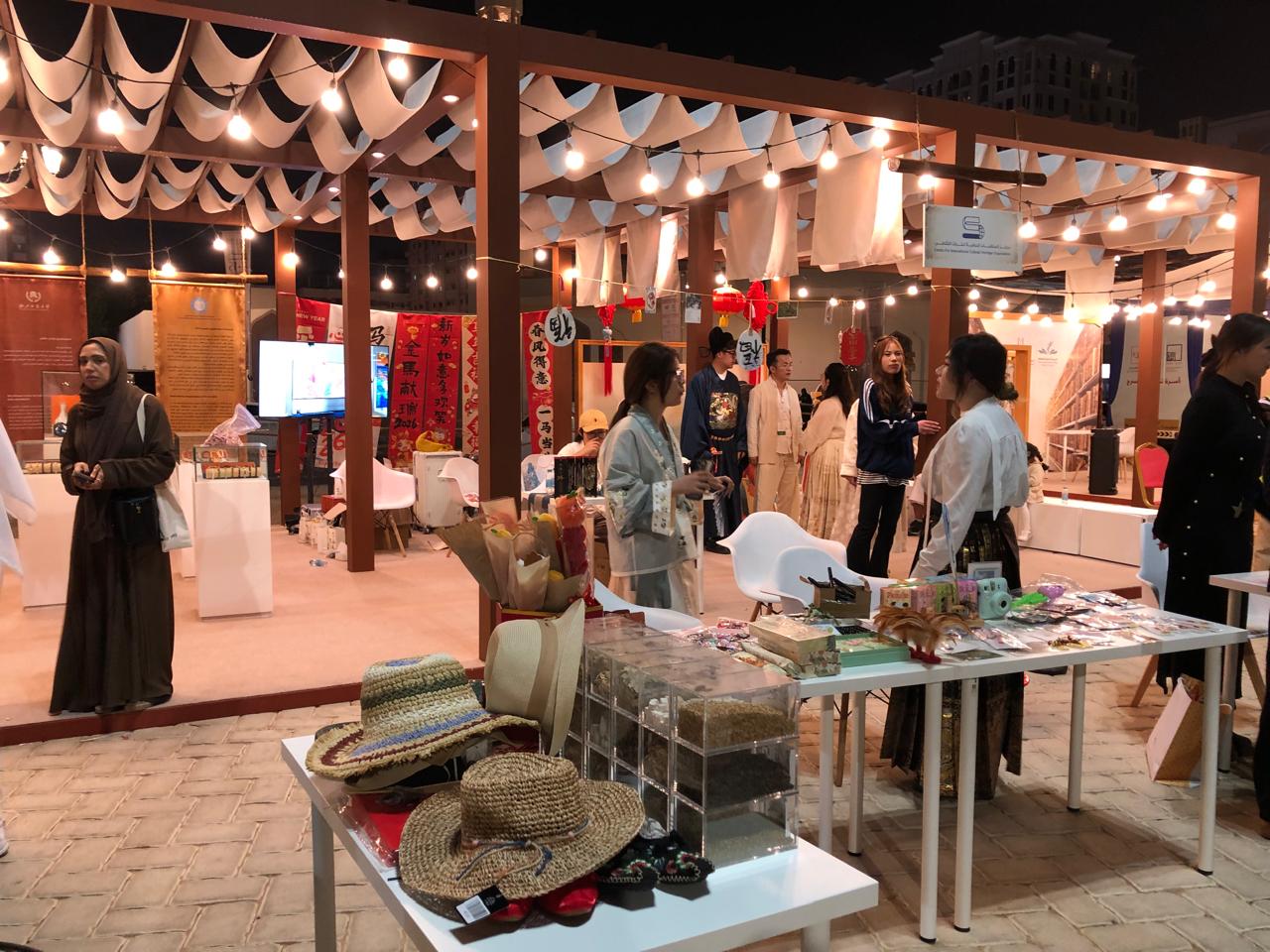
China is participating alongside 27 countries in Sharjah Heritage Days, in its 23rd edition held under the theme “Radiance of Authenticity”, reaffirming its role in promoting cultural exchange and strengthening the values of dialogue among peoples. Through its pavilion in the International Organizations Section at the Days Square outside the wall, China presents a rich panorama of its tangible and intangible cultural heritage, including popular cuisine, traditional costumes, and performing arts such as dance and music, alongside inherited crafts like embroidery and tailoring.
Arabic as a Bridge for Cultural Communication
The Chinese pavilion reflects the depth of cultural relations with Sharjah, as participants speak Classical Arabic fluently—an eye-catching scene that underscores China’s interest in teaching Arabic at a number of its universities, including Zhejiang University of Industrial and Commercial Sciences, with support from the Sharjah Institute for Heritage. This interest also extends to media and joint cultural projects, such as Arabic-language radio programs and cultural competitions.
Ancient Civilizational Roots
Chinese culture is grounded in a profound legacy dating back to prehistoric eras, as revealed by Neolithic archaeological discoveries. Chinese tools and arts are distinguished by intricate motifs and decorations on pottery, bronze, porcelain, and textiles, as well as in paintings and household furnishings—reflecting an aesthetic sensibility passed down through the centuries.
The Silk Road and Tea: A Living Popular Memory
The Silk Road stands as a symbol of cultural and commercial exchange between China and the world, extending to the Arab Gulf and the UAE. Chinese tea emerges as one of the most significant elements of popular heritage memory; a special corner at the festival is dedicated to introducing its etiquette of hospitality and methods of preparation. Notably, tea was inscribed on UNESCO’s Representative List of the Intangible Cultural Heritage of Humanity in 2022. Its types are diverse, and each type has its own medicinal and culinary uses, as well as its own rituals.
A Visual Dialogue Between Two Civilizations
Drawing particular attention in the Chinese pavilion is the art of paper cutting, presented by artist Ma Jincai, who has developed an aesthetic style blending traditional Chinese motifs with Arab and Islamic arts. One of his works has been preserved at the Sharjah Holy Quran Academy, offering a vivid embodiment of artistic dialogue across cultures.
Through this diverse presence, China affirms at Sharjah Heritage Days that heritage is not merely a memory of the past, but a shared human language that transcends borders and opens new horizons for encounter and mutual understanding among peoples.