



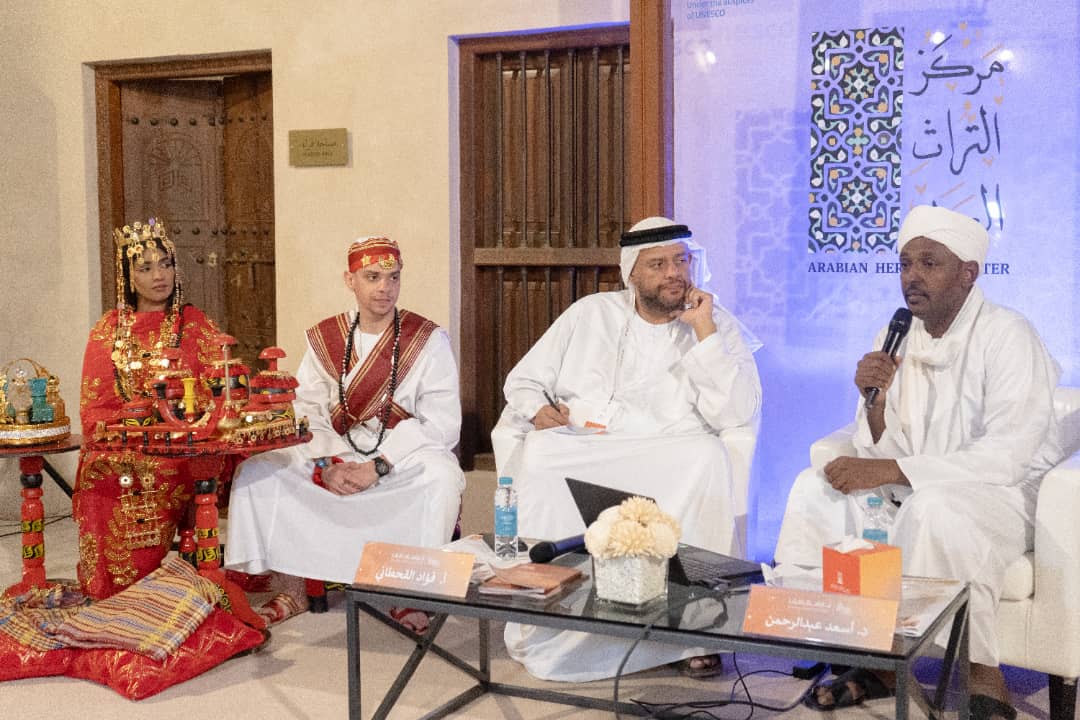
In the Presence of a Large Audience: The Arab Heritage Center Discusses the Sudanese Jirtig Ritual at Sharjah Heritage Days (23rd Edition)
Sharjah, 6 February 2026
As part of the activities of the 23rd edition of Sharjah Heritage Days, the Arab Heritage Center hosted today a seminar to discuss the Sudanese Jirtig itual, considering it an integral part of Sudanese customs and traditions and one of the domains of intangible cultural heritage.
Jirtig and the Aspiration for a Happy Married Life
The Sudanese researcher and academic, Dr. Asaad Abdulrahman, said that Jرتق is one of the traditional rituals practiced for newlyweds after the marriage contract is concluded. Its concept is based on popular beliefs aimed at protecting the couple from the evil eye and fostering optimism for a happy married life.
He added that Jirtig performed during the wedding as a form of supplication for prosperity, children, and all that brings happiness to married life, noting that this ritual includes symbolic tools that reflect Sudanese culture and heritage and carry significant cultural value.
Jewelry Used in Traditional Sudanese Weddings
During the seminar, a number of jewelry pieces traditionally used in Sudanese weddings in the past were showcased, along with a presentation of marriage rituals in earlier times and a comparison with contemporary wedding practices. This highlighted the depth of Sudanese heritage and its continuity to the present day.
The Ancient Linguistic Roots of Jirtig
Abdulrahman pointed out that the word Jirtig …to ancient languages, as linguists believe it is a Meroitic word meaning ‘the king’s authority,’ and it is used in the vocabulary of the Nubian people, giving it the meaning ‘to make him a king.’
”. This reflects deep linguistic and historical connotations that remain present to this day. Jirtig symbolizes a celebratory ritual accompanied by the use of perfumes, where the bride and groom sit in a distinctive posture for photography. Beads and the crescent moon are present as symbols of good fortune, with the color red predominating.
He also drew attention to the cultural significance of Jirtig, noting its important role in strengthening social ties and contributing to family cohesion. It is a source of pride in Sudan, as it expresses cultural identity.
He further referred to the methods of preparing this file and the joint efforts undertaken to register Jirtig among the elements of tangible heritage with UNESCO.