



Popular Markets… The Memory of Civilization in the “Glow of Authenticity”
Sharjah, February 12, 2026
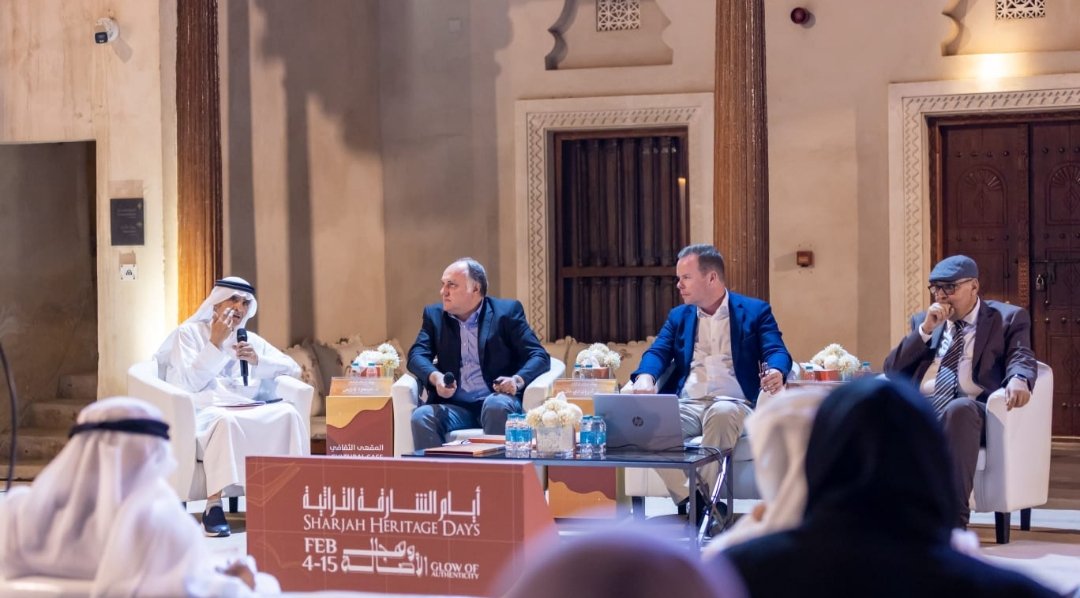
As part of the Intellectual Forum of the 23rd edition of Sharjah Heritage Days, held under the theme “Glow of Authenticity,” the event hosted a scholarly seminar titled “Popular Markets.” Moderated by Dr. Adel Al-Kassadi, the session brought together distinguished academics who presented in-depth historical and economic perspectives on the transformations of traditional markets in Egypt, the Gulf, and the Balkans.
Khan El-Khalili: From Mamluk Market to Global Landmark
In his paper, “Khan El-Khalili: From a Mamluk Market to a Tourist Destination,” Dr. Yahya Mohamed Mahmoud traced the historical evolution of this iconic site, emphasizing its role as a vibrant center for the transmission of cultural influences since the 14th century. He explained that the market preserved its architectural and functional character before gradually transforming into a global tourist destination that blends the fragrance of history with the spirit of contemporary life.
The researcher also highlighted the documentary value of Khan El-Khalili in Orientalist paintings, particularly the work of the artist Hickey, which captured the details of the market and its historic gate. He noted that the Khan represented an early model resembling a modern “shopping mall,” where both local and international goods were concentrated.
Dr. Mahmoud further underscored the emotional and social significance of the area, pointing out that it has long been a destination for leaders, intellectuals, and tourists alike. He described it as an integrated civilizational unit that allows visitors to experience successive centuries of history within a single space combining shopping, traditional cafés, and historic bathhouses.
Portuguese Mercantilism: Control Through Monopoly
Dr. Adrian De Man presented a paper entitled “Markets and Mercantilism during the Portuguese Presence,” examining the commercial system in the Gulf during the 15th and 16th centuries. He explained that the Portuguese did not establish an entirely new system; rather, they sought to control the existing one through a mercantilist approach based on monopoly and taxation.
He referred to the implementation of the cartaz system, which imposed paid sailing permits, in addition to the establishment of customs posts to regulate maritime movement. He also noted that limited manpower led the Portuguese to rely on mercenaries from India and Africa, contributing to administrative imbalances and the spread of corruption due to the short tenure of appointed leaders.
Dr. De Man stressed that understanding this period requires reading history from the perspective of everyday life—of merchants, pearl divers, and local communities—affirming that heritage is a contemporary reading of the past in service of the present.
Balkan Markets: Waqf Shaping the City
Dr. Masoud Idris, in his paper “Popular Markets in Macedonia: From Their Origins to the Present Day,” explored the emergence of markets in the Balkans. He explained that the Ottoman waqf (endowment) system contributed to transforming villages into fully integrated cities from the 15th century onward.
He noted that historic city centers such as Skopje and Sarajevo still retain their endowment-based identity, where fountains, khans (caravanserais), and covered markets (bezistans) stand side by side. Caravanserais once served as strategic hubs for traders, while some heritage sites have since been transformed into museums and art galleries.
He added that both open and covered markets in the Balkans continue to thrive with traditional crafts such as copperwork, textiles, and shoemaking, emphasizing that they remain social spaces reflecting hospitality and cultural identity.
Markets as Spaces of Human Interaction
The seminar also featured discussions on the meanings of historical terminology and drew connections between international experiences and the local context, recalling the history of the “Khan” area in Sharjah as a former resting point for travelers.
Participants concluded that popular markets were never merely places for buying and selling; rather, throughout history they have served as centers of human and cultural interaction. They have played a vital role in shaping the civilizational identity of societies in Egypt, the Gulf, and the Balkans, remaining a living testament to the enduring “Glow of Authenticity” across time.