



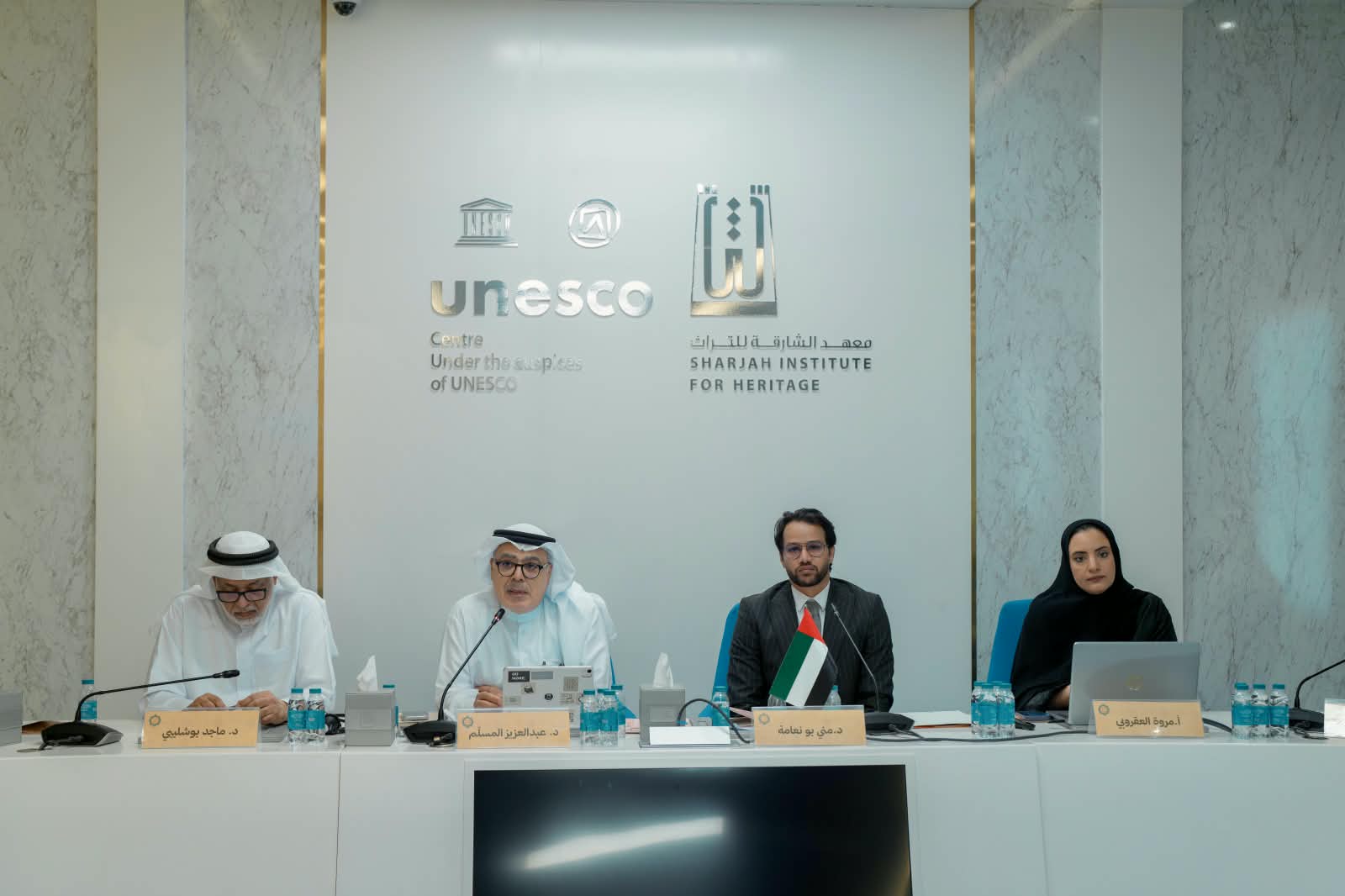
Sharjah International Narrator Forum Explores Transformations of Friendship in Emirati Popular Memory
A panel of researchers and specialists explored the evolving concept of friendship and its manifestations in Emirati popular memory during the fifth session of the scientific programme of the 26th edition of the Sharjah International Narrator Forum.
Held under the theme “Transformations of Friendship in Emirati Popular Memory,” the session brought together H.E. Dr. Abdulaziz Al Musallam, President of the Sharjah Institute for Heritage and Chairman of the Forum’s Higher Organising Committee; Dr. Majid Bushleibi, Secretary-General of the Islamic Forum; Marwa Al Aroobi, Executive Director of House of Wisdom; and poet and researcher Ali Ahmed Al Kindi Al Murrar. Dr. Munni Bu Naamah, Director of the Content and Publishing Department at the Sharjah Institute for Heritage, moderated the session.
Friendship in Emirati Memory
In his paper, “My Great Friend,” Dr. Abdulaziz Al Musallam examined friendship across different stages of life and its ability to endure over time. He highlighted examples preserved in local popular memory, including the longstanding friendship between poets Rashid Al Khodr and Majid bin Ali Al Nuaimi, which continued until Al Nuaimi’s death.
He also referred to his nearly 25-year friendship with poet Atiq Al Qubaisi and the poetic exchanges that marked their relationship, noting that friendship forms an important part of society’s emotional and human heritage and contributes to shaping its identity.
Dr. Munni Bu Naamah opened the session by addressing friendship as a deeply rooted human value reflected in epics, popular narratives and literary works. He cited “The Iliad” and “The Odyssey” as examples of major works in which human bonds and friendship have featured as enduring themes.
Stories Build Cross-Cultural Bridges
Marwa Al Aroobi, in her presentation “From the Emirati Story to Cross-Cultural Friendship,” highlighted efforts to adapt Emirati folk narratives for children’s literature.
She presented the “Khrairifa Majrifa” project, which explores the creation of Emirati children’s books and the presentation of Emirati stories to illustrators from different cultural backgrounds.
Al Aroobi said the experience, which initially focused on identifying cultural differences, ultimately revealed broader areas of commonality. Despite variations in imagery and forms of expression, human emotions remain universal, demonstrating the ability of stories to foster friendship and communication among cultures and peoples.
Friendship, Rivalry and Loyalty
Dr. Majid Bushleibi presented “A Reading of Narrated Dichotomies,” examining the relationship between the renowned poets Jarir and Al-Farazdaq and the interplay between friendship and rivalry in their literary legacy.
He highlighted their poetic exchanges, including satire and competition, alongside Jarir’s celebrated elegy for Al-Farazdaq following his death. The example, he noted, raises broader questions about the nature of friendship, its boundaries and its diverse meanings in literature and cultural heritage.
Place as a Source of Memory
Poet and researcher Ali Ahmed Al Kindi Al Murrar presented “Friendship with Place,” exploring the relationship between people and place as an expression of belonging, loyalty and attachment.
Drawing on his field research and encounters with narrators, he highlighted the deep connection between people and their places, particularly in the Liwa region. He noted that older generations often display strong emotions when recalling historic locations and the people associated with them, reflecting the enduring presence of place in their memories.
He explained that this relationship extends beyond geographical attachment to encompass loyalty to place, its preservation and the protection of its heritage, making it an integral part of human memory and identity.