



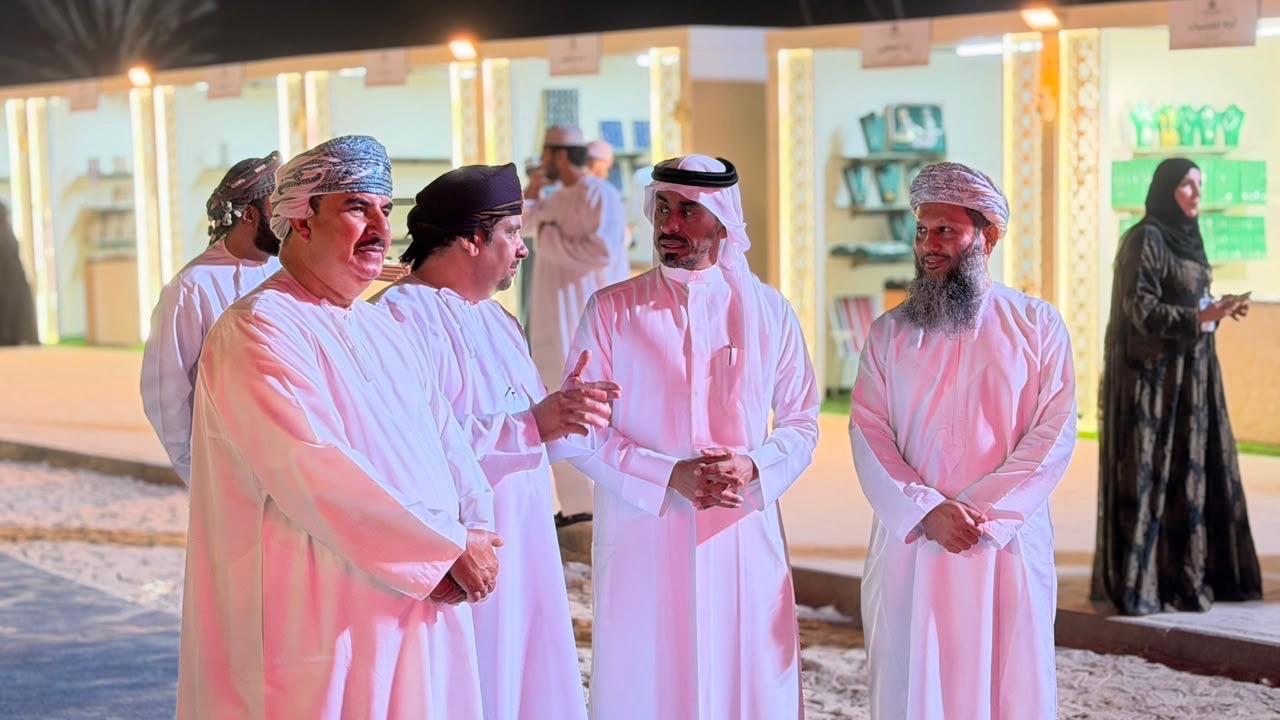
(SIH) Delegation Explores Oman’s Heritage Treasures in Salalah
As part of efforts to strengthen cultural communication and exchange expertise in heritage preservation and the promotion of folk traditions, a delegation from the Sharjah Institute for Heritage visited Salalah in the Dhofar Governorate of the Sultanate of Oman, headed by His Excellency Abubakr Al Kindi, Director of the Institute. The delegation toured a number of heritage landmarks, museums, and sites, exploring diverse traditional crafts and the rich cultural environments that characterize the governorate.
Omani Crafts… A Living Memory
The delegation began its visit at the Omani Crafts Exhibition, where it was received by Mr. Nasser bin Saif Al Hatmi, Heritage Crafts Expert at the Ministry of Heritage and Tourism, and Mr. Mohammed bin Ahmed Al Amri, Head of the Studies and Research Department at the Ministry. The delegation learned about some of Oman’s most prominent traditional crafts and their important role in the country’s cultural identity and artisanal heritage.
Dhofar Museum Documents Local Memory
The delegation also visited the private Dhofar Museum, owned by Mohammed bin Abdulmohsen Al Ghassani. His son, Harith bin Mohammed Al Ghassani, welcomed the delegation and provided a comprehensive explanation of the museum’s collections, including materials, documents, and heritage artifacts that reflect aspects of the region’s history and the lives of its people.
Land of Frankincense… A UNESCO Heritage Legacy
The tour also included a visit to the Land of Frankincense Museum in the historic Al Baleed area, which is inscribed on the UNESCO World Heritage List. The delegation was received by the museum’s management and toured its four galleries, learning about the history of frankincense and its economic, cultural, and civilizational significance in Dhofar.
“Return of the Past” Revives Heritage Environments
The delegation concluded its tour with a visit to the heritage village as part of the “Return of the Past” events, which presented a comprehensive picture of the diversity of environments and heritage traditions in Dhofar Governorate. The experience included Al Fardah Market, dedicated to the sale of frankincense products, as well as the Bedouin environment reflecting the traditional lifestyle of the Dhofar desert, and the rural environment showcasing the way of life of communities in the governorate’s mountainous areas.
The tour also featured the maritime environment, exhibitions organized by Omani Women’s Associations in the wilayats of Dhofar Governorate, the agricultural environment, and the heritage market within the village. The delegation also attended live performances by a number of folk groups from Dhofar, highlighting the richness of local arts, chants, and cultural traditions.
Prospects for Cooperation and Promoting Shared Heritage
His Excellency Abubakr Al Kindi said that what the delegation witnessed during the tour confirmed that Omani heritage, particularly in Dhofar, represents an integrated cultural system in which crafts, arts, environment, customs, and traditions are closely interconnected. He noted that exchanging visits and expertise between heritage institutions in the UAE and the Sultanate of Oman opens broader horizons for cooperation and for promoting the shared heritage of the Gulf region.
He added that the Sharjah Institute for Heritage places great importance on building cultural partnerships and exchanging experiences with heritage institutions, contributing to the documentation and preservation of cultural heritage and strengthening its presence on the cultural scene. He emphasized that such visits provide a platform for mutual learning and benefiting from successful experiences in preserving heritage and passing it on to future generations.
The visit comes as part of the Sharjah Institute for Heritage’s commitment to strengthening bridges of cooperation and communication with heritage institutions and organizations in the Sultanate of Oman, as well as exchanging experiences and expertise in ways that contribute to preserving cultural heritage and highlighting it for future generations.