


Sudanese Jarteq tradition draws strong public interest at Sharjah Heritage Days
Sharjah, 6 February 2026
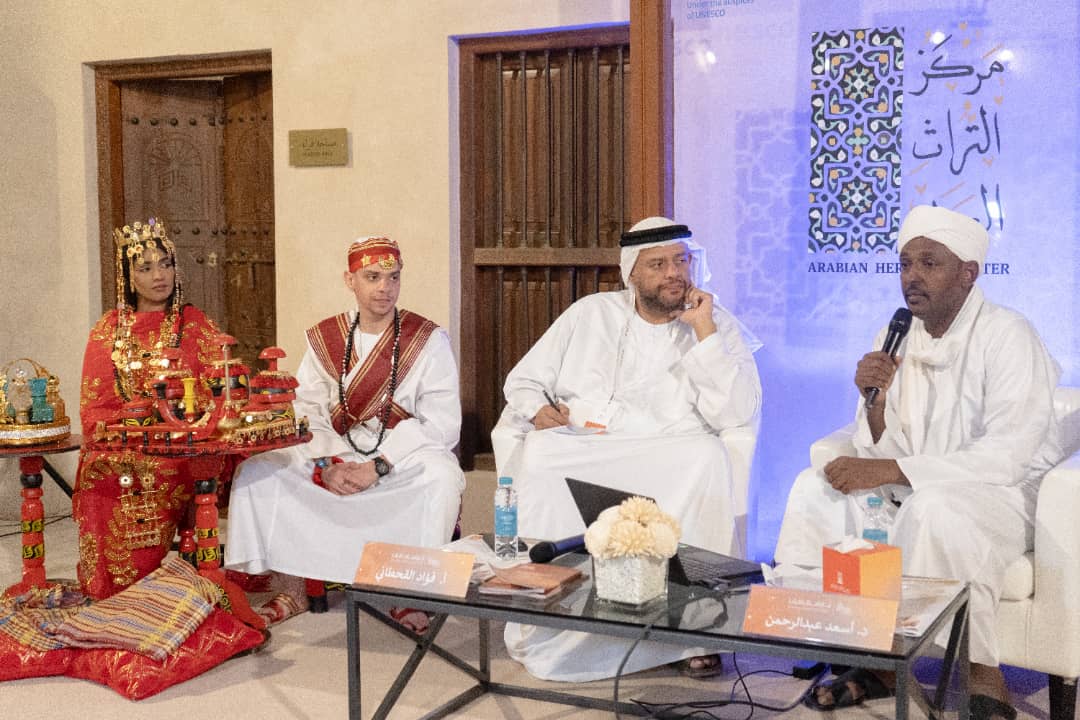
With audiences filling the hall, the Arab Heritage Centre* hosted a well-received cultural seminar on the *Sudanese Jarteq tradition during the 23rd edition of Sharjah Heritage Days, highlighting one of Sudan’s most distinctive and enduring wedding customs.
The session, held on the sidelines of the festival’s activities, focused on Sudanese Jarteq as an inherited social practice rather than a ceremonial formality. Speakers stressed that such traditions are shaped by collective memory and daily life, making them a core element of intangible cultural heritage.
Dr Asaad Abdulrahman explained that Sudanese Jarteq is traditionally performed for newlyweds after the marriage contract is signed. The practice, he said, is rooted in popular beliefs associated with protection from the evil eye and the hope for a happy, stable married life.
“The ceremony carries wishes for prosperity, harmony and children,” Dr Abdulrahman said, noting that the tools and symbols used during Sudanese Jarteq are closely tied to Sudanese culture and reflect deep social meanings that have been preserved over generations.
During the discussion, audiences were introduced to examples of traditional jewellery once used in Sudanese weddings, alongside visual presentations comparing marriage customs in the past with those practiced today. The contrast, speakers said, demonstrated how Sudanese heritage has adapted over time while retaining its essence.
Dr Abdulrahman also addressed the linguistic origins of the term Sudanese Jarteq, explaining that researchers link it to ancient languages. In Nubian usage, the word conveys the meaning “to make him a king,” a description that reflects the symbolic elevation of the bride and groom during the ceremony.
Characterised by celebration and symbolism, Sudanese Jarteq features the use of traditional perfumes, beads and crescent-shaped ornaments associated with good fortune. The bride and groom are seated in a distinctive arrangement for photographs, while the colour red dominates the setting, symbolising vitality, joy and protection.
Speakers highlighted the broader social role of Sudanese Jarteq, noting its importance in strengthening family bonds and reinforcing social cohesion. In Sudan, the tradition is widely viewed as a source of cultural pride and a powerful expression of national identity.
The seminar also shed light on ongoing efforts to document Sudanese Jarteq as part of a heritage file being prepared for submission to UNESCO, reflecting wider initiatives to safeguard living traditions and ensure their recognition on an international level.