



Abu Dhabi shares heritage protection and cultural education efforts at Sharjah Heritage Days
Sharjah-8.2.2026
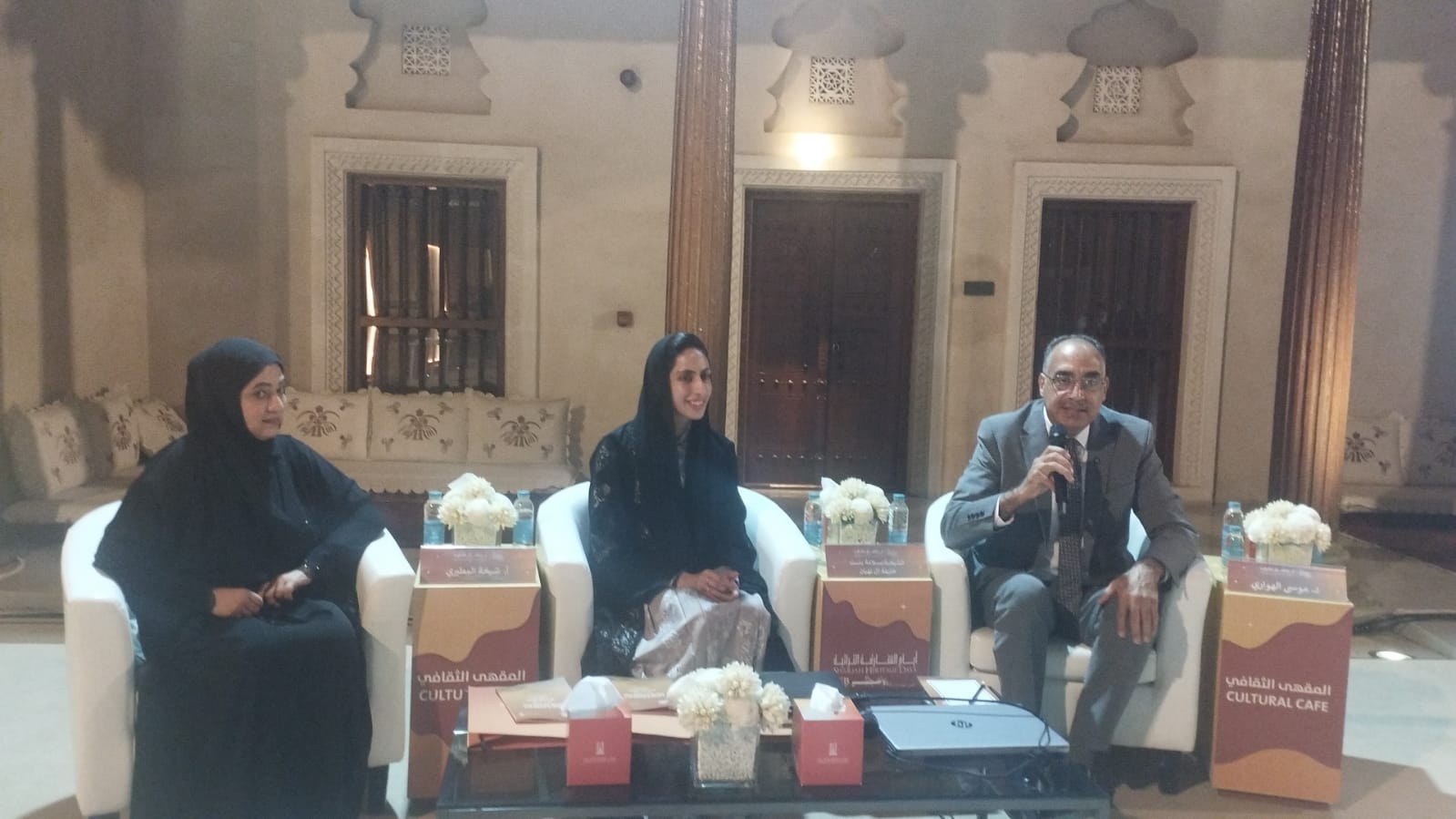
The Department of Culture and Tourism – Abu Dhabi highlighted its wide-ranging efforts to protect heritage and integrate culture into education during a seminar held at the Cultural Café in Bait Al Naboodah, on the sidelines of Sharjah Heritage Days.
Speaking at the session, titled “Institutional Efforts to Protect Heritage”, Dr Mousa Al Hawari, Education Content Development Officer at the department, said Abu Dhabi has positioned culture as a central pillar of its development strategy, supported by a network of internationally recognised museums and heritage sites.
Al Hawari noted that the department plays a leading role in shaping the UAE’s cultural landscape through institutions such as Louvre Abu Dhabi, Zayed National Museum, and a number of key cultural sites across Al Dhafra and Al Ain.
He explained that the decision to merge the tourism and culture sectors under one entity strengthened both fields, allowing heritage to become an essential part of the visitor experience. He added that Abu Dhabi is working to establish itself as a cultural capital and an influential regional hub, while ensuring that local culture remains at the heart of its vision.
Al Hawari said the department launched the UAE’s first specialised cultural education division, which focuses on history, heritage and shared human values through seminars, programmes and training courses. These initiatives aim to engage young people and promote community participation, with Emirati professionals forming the backbone of most project teams.
Several heritage sites have also been transformed into open educational environments. Qasr Al Hosn, for example, has been equipped with interactive screens, learning experiences and libraries, while Al Jahili Fort, Al Muwaiji Museum and Al Ain Museum now present history through narrative storytelling linked to the lives of national leaders, including the late Sheikh Zayed bin Sultan Al Nahyan.
Al Hawari said the UAE has successfully registered 14 elements of its intangible cultural heritage on international lists, and these elements have been incorporated into cultural education programmes. He stressed that cultural content must evolve to keep pace with modern life, noting the department’s focus on digital platforms, educational applications and heritage-based content creation.
He also highlighted initiatives that blend traditional and contemporary arts, including music and textile projects showcased on Saadiyat Island, as well as joint programmes with the Ministry of Education aimed at developing storytelling skills, training site guides and supporting curriculum development.
For her part, Sheikha Salama bint Khalifa Al Nahyan emphasised the importance of strengthening students’ awareness of cultural heritage and linking school curricula to national traditions. She said museums should be viewed as living classrooms that help bridge the past and the present.
She noted that programmes, workshops and family-focused activities play a vital role in building collective awareness of both tangible and intangible heritage. She also pointed to the UAE’s success in registering 14 heritage elements, including bridal processions, traditional attire and kohl, which continue to be practised within society.
Sheikha Salama added that the department participated last year in the UNESCO Pavilion in Japan and launched an educational resource on Al Ain’s cultural sites in cooperation with the Ministry of Education. The resource, translated into English, includes maps and educational videos, alongside a series of cultural publications.
She concluded by saying that the department recently launched the UAE’s first specialised cultural education platform, describing it as a milestone achievement that reflects the country’s growing global presence in the field of cultural education.