



Between the Memory of Resilience and Wisdom… “Sharjah Institute for Heritage” Hosts a Panel Discussion on “The Emirati Family in Managing Crises in the Past”
Sharjah, April 7, 2026
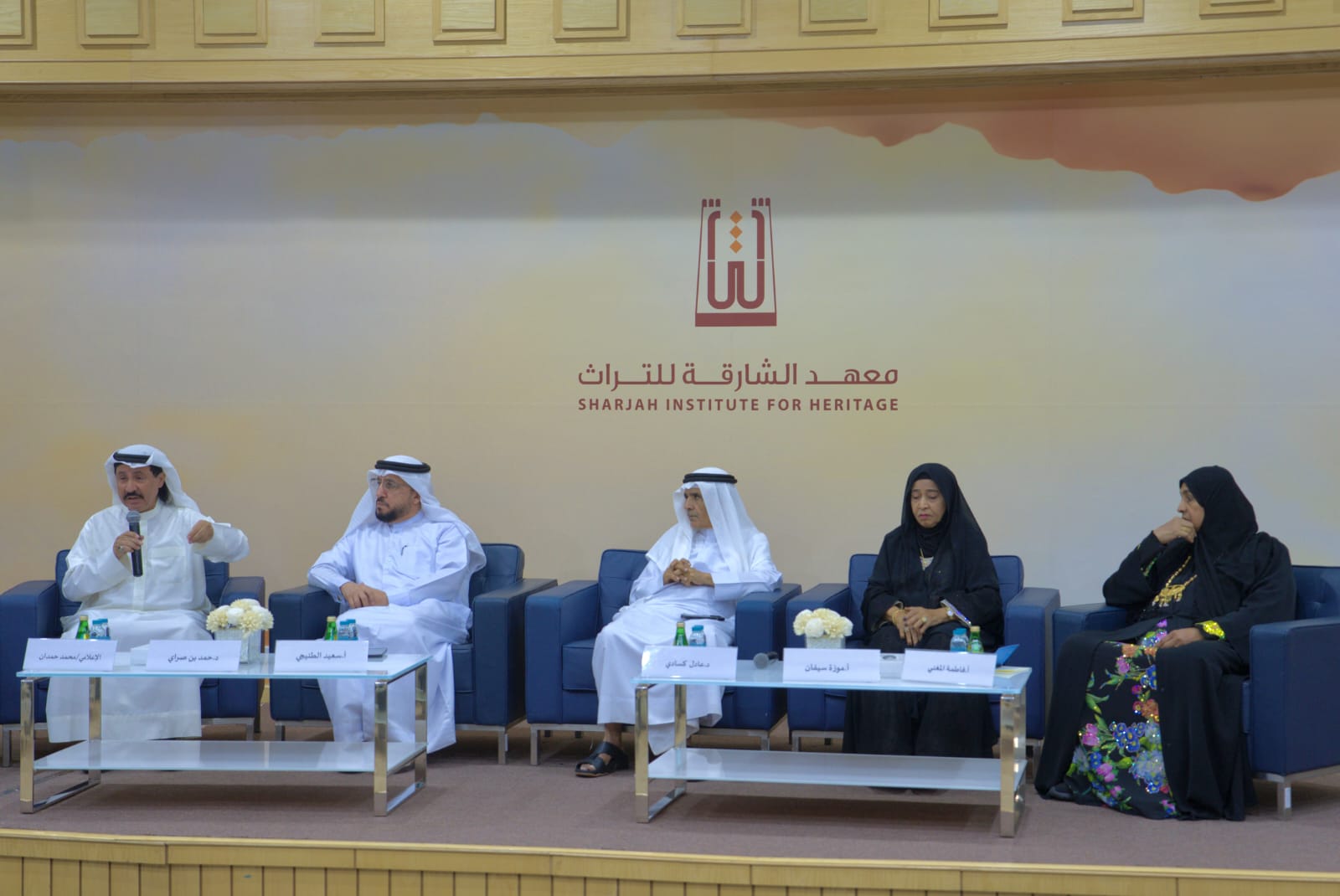
As part of its commitment to reviving cultural memory and enhancing societal awareness, the Sharjah Institute for Heritage organized, on Tuesday morning at its theater, a panel discussion titled “The Role of the Emirati Family in Managing Crises and Disasters in the Past.” The session brought together a distinguished group of academics and researchers, and was attended by a notable audience of interested participants and media representatives. The discussion served as a rich platform to review past experiences and draw lessons applicable to present-day challenges.
A Value System and Its Role in Overcoming Challenges
The panel highlighted inherited experiences that demonstrated the Emirati family’s ability to adapt to crises, showcasing the system of values on which it was built—such as patience, solidarity, and sound management—and their role in overcoming various environmental and social challenges over time.
The Family’s Role in Crisis Management
Dr. Hamad bin Saray reviewed the cultural and social dimensions of the family’s role in managing crises, addressing how risks were handled in the past and emphasizing the wisdom of patience and the ability to cope with life’s fluctuations, particularly in maritime environments and the challenges they entailed.
For his part, Saeed Al Teneiji discussed the societal values that strengthened family cohesion, praising the role of the community in overcoming risks and challenges. He affirmed that the United Arab Emirates today enjoys strength and resilience thanks to its wise leadership. He also called for adherence to official guidelines, raising awareness, avoiding transferring fear to children, and adopting transparency when communicating with them.
Meanwhile, Dr. Adel Kasadi presented an analytical reading of heritage experiences in confronting disasters, stressing the importance of documenting them and highlighting the role of social solidarity among families, who used to unite and cooperate to overcome crises.
Moza Saifan also spoke during the session, addressing the importance of defending the الوطن (homeland) and presenting examples of community engagement and national responsibility during times of hardship.
Fatima Al Mughanni praised past social cohesion and discussed examples of historical health crises, such as the spread of smallpox, and how families dealt with it through isolation in remote areas and the use of simple available remedies. She emphasized the vital role of Emirati women in managing crises and strengthening family stability.
Real-Life Experiences of Emirati Society
Aisha Ghabish, Director of the Events and Dialogue Activities Department at the Institute, explained that the session aimed to shed light on real-life experiences lived by Emirati society in confronting crises. Speakers shared stories and memories reflecting the Emirati family’s ability to adapt and coexist with difficult circumstances. She noted that the session highlighted important aspects of social solidarity that prevailed in the past and how families cooperated to overcome challenges.
She also pointed out that the discussion was attended by institute staff and representatives of community associations, including the Emirates Retirees Association and Al Asalah Club, adding a rich societal dimension to the dialogue.
The Family: The Foundation of Cohesive Societies
The session concluded by emphasizing the importance of drawing inspiration from the deeply rooted experiences of the Emirati family as a fundamental pillar in strengthening social cohesion and enhancing the community’s ability to face contemporary crises with awareness and confidence.
At the end of the event, the Institute, represented by Aisha Ghabash, honored the speakers who enriched the session and its themes, in appreciation of their academic and intellectual contributions to the success of the discussion