


Broad Arab Cultural, Scientific and Academic Participation Marks the Launch of the Third Heritage Conference in Sharjah to Explore the Future of Oral Traditions in the Digital Age
In a distinguished Arab cultural and academic gathering that reflects Sharjah’s well-established leadership in safeguarding humanity’s cultural heritage, the third edition of the Heritage Conference officially commenced on Tuesday. Organized by the Sharjah Institute for Heritage over four days under the theme “Oral Traditions in a Changing World: From Live Performance to Digital Media,” the conference brings together an elite group of researchers, academics, experts, and specialists from the United Arab Emirates and across the Arab world.
The conference reaffirms Sharjah’s pioneering role in leading the Arab cultural movement and strengthening its position as a regional and international hub for scholarly dialogue on intangible cultural heritage. Through a comprehensive scientific programme, participants will explore the latest perspectives and experiences in documenting and safeguarding oral traditions while examining innovative approaches to preserving this invaluable human legacy through modern technologies. The conference serves as a distinguished knowledge platform dedicated to ensuring the sustainability of oral traditions amid the rapidly evolving digital landscape, balancing the authenticity of heritage with the demands of the future.
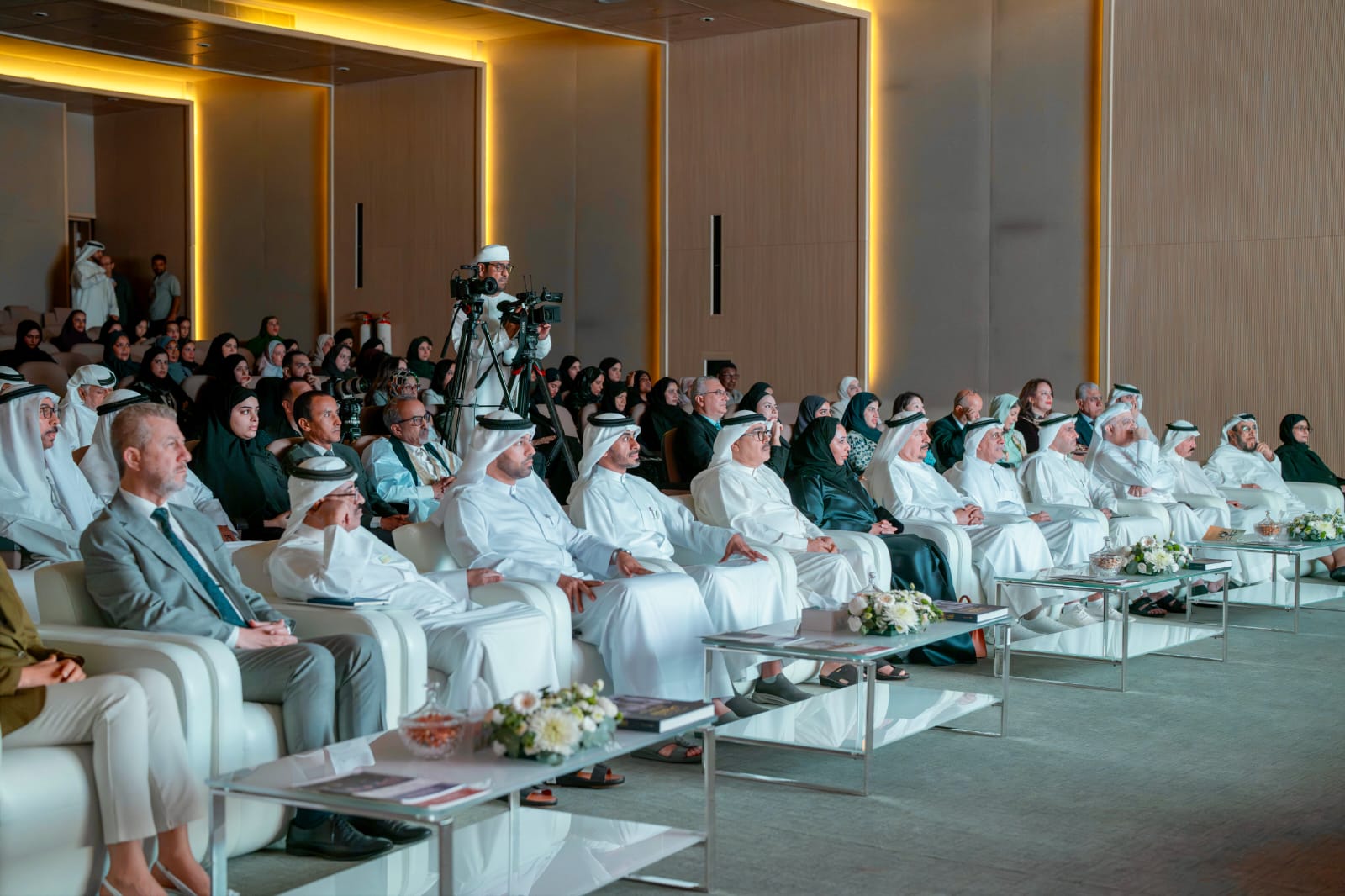
The opening ceremony featured a remarkable gathering of cultural and academic figures, with keynote addresses highlighting the significance of oral traditions as one of the fundamental pillars of identity and collective human memory. The programme also included the honouring of the Conference Personality and several distinguished cultural figures, the launch of a number of specialized scholarly publications, the inauguration of the accompanying exhibition “From Memory to Memory,” and the unveiling of the Academic Assistant Platform. These events coincided with the start of the conference’s scientific sessions, which will examine, over the coming days, key issues related to oral traditions, their documentation, preservation, and promotion within the digital environment.
Al Musallam: Sultan Al Qasimi’s Vision Has Made Sharjah a Global Beacon for Heritage Preservation
His Excellency Dr. Abdulaziz Al Musallam, Chairman of the Sharjah Institute for Heritage and President of the Conference, affirmed that Sharjah’s firmly established presence on the global cultural and heritage landscape is the direct outcome of the visionary leadership of His Highness Sheikh Dr. Sultan bin Mohammed Al Qasimi, Supreme Council Member and Ruler of Sharjah, whose enlightened vision transformed heritage into a comprehensive national and humanitarian project. Over more than four decades, His Highness has built a pioneering framework for safeguarding both tangible and intangible cultural heritage, making Sharjah an inspiring international model in harmonizing authenticity with the requirements of modernity.
Dr. Al Musallam explained that the third edition of the Heritage Conference, held under the theme “Oral Traditions in a Changing World: From Live Performance to Digital Media,” reflects the Sharjah Institute for Heritage’s commitment to anticipating the future of cultural heritage while opening new scholarly horizons for studying the transformations affecting oral traditions in the age of digital revolution. He emphasized that the Institute continues its efforts in collecting, documenting, and researching heritage while simultaneously developing innovative tools capable of safeguarding this invaluable human legacy and reinforcing its relevance in contemporary society.
He further noted that oral traditions constitute the living memory of societies, encompassing proverbs, folktales, poetry, oral narratives, and inherited knowledge that have preserved values and collective experiences across generations. Through multidisciplinary scientific approaches, the conference explores the transformations in performance, narration, and the evolving functions of oral traditions, while seeking practical ways to harness modern technologies and artificial intelligence in the service of heritage without compromising its authenticity or cultural context.
Al Kindi: A Leading Arab Platform for Envisioning the Future of Cultural Heritage
For his part, His Excellency Abu Bakr Al Kindi, Director of the Institute, stressed that the Heritage Conference has become one of the Arab world’s foremost scientific platforms for dialogue on issues related to intangible cultural heritage. It reflects the Institute’s commitment to leadership and excellence in addressing topics that respond to contemporary challenges while opening new avenues for researchers and experts to exchange knowledge and expertise, thereby enhancing the presence of heritage within both the Arab and international cultural landscape.
He noted that oral traditions represent one of the most significant components of the cultural identity of peoples, preserving generations of accumulated knowledge, experience, and values through the spoken word. Their preservation, therefore, is a shared responsibility that requires the effective use of digital media and modern technologies while maintaining their authenticity. Al Kindi added that the conference continues its tradition of honouring distinguished scholars whose contributions have enriched heritage studies, alongside organizing specialized scientific discussions on the opportunities and challenges that the era of artificial intelligence presents for cultural heritage.
Bounaamah: Oral Traditions Are Reinventing Their Presence in the Digital Era
Dr. Monna Bounaamah, Chairman of the Conference Scientific Committee, emphasized that oral traditions have historically served as the living memory of nations, safeguarding their cultural and intellectual heritage through oral transmission. He pointed out that the accelerating pace of digital transformation requires new visions for preserving and investing in this rich heritage.
He explained that the conference’s scientific sessions address theoretical foundations, digital transformation, the role of artificial intelligence in documenting and digitizing oral traditions, international institutional experiences, and the legal protection of heritage. These discussions are complemented by the “From Memory to Memory” exhibition and the launch of several scholarly publications that enrich the Arab library and support research and documentation in the field of intangible cultural heritage.
Al Mazrouei: Heritage Is Memory and Identity
Addressing the opening session, Dr. Rashid bin Ahmed Al Mazrouei, honoured as the Conference Personality, expressed his deep appreciation for the recognition, describing it as a renewed responsibility to continue serving the nation’s heritage. He praised the unwavering support of His Highness the Ruler of Sharjah for cultural and heritage initiatives, which has positioned Sharjah as a leading beacon of culture and heritage regionally and internationally.
He stressed that oral traditions are far more than stories, poetry, and proverbs; they represent the living memory of society. He also emphasized that the role of heritage researchers extends beyond collecting cultural materials to analysing and presenting them to younger generations through contemporary approaches while utilizing modern technologies in ways that preserve their authenticity.
Scientific Sessions and New Publications
Following the opening ceremony, the conference’s scientific sessions commenced, focusing on five principal themes: oral traditions between theoretical foundations and digital transformation; performance in the age of algorithms; safeguarding intangible cultural heritage; legal protection; and Arab and international institutional experiences. The sessions feature the participation of leading researchers and experts from across the Arab world.
The conference also witnessed the launch of several new publications, including “Oral Traditions” by Dr. Iman Mohammed Turki, published by the Abu Dhabi Arabic Language Centre; “Bedouin Stories and Tales” by Majid Shabr; and “Dr. Paul Harrison” by Dr. Mohammed Nasser Louri, in addition to a collection of specialized research publications in heritage and folklore studies.
Honouring Distinguished Figures and an Accompanying Exhibition
The opening ceremony honoured the Conference Personality, Dr. Rashid bin Ahmed Al Mazrouei, together with Salah Salem Al Mahmoud, Dr. Iman Mohammed Turki, Majid Shabr, Dr. Mohammed Nasser Louri, Vice President of the Bahrain Society of History and Archaeology, and media professional Hamed Mohammadi from the Sharjah Broadcasting Authority, before the honourees gathered for a commemorative group photograph.
The first day concluded with the inauguration of the accompanying exhibition “From Memory to Memory,” which traces the evolution of oral traditions and their journey from oral narration to digital platforms, vividly illustrating the transformation of cultural memory across time.
The Institute also launched its Smart Academic Assistant Platform. Dr. Saber Yahya Marzouki, Head of the Department of Education and Quality Assurance at the Institute’s Academic Administration, explained that the platform is an interactive online service operating around the clock, providing comprehensive information on the Institute’s academic regulations, policies, and educational programmes.
The third edition of the Heritage Conference, held from 7 to 10 July, once again demonstrates the Sharjah Institute for Heritage’s continued commitment to fulfilling its scholarly and cultural mission by building bridges of dialogue between Arab and international experts, generating specialized knowledge, and strengthening efforts to safeguard intangible cultural heritage in ways that meet future aspirations while preserving the authenticity and richness of humanity’s shared heritage.