



Oral Traditions in the Face of Digital Transformation :Heritage Conference Continues Exploring Arab Experiences in Safeguarding Intangible Cultural Heritage
The third edition of the Heritage Conference, organized by the Sharjah Institute for Heritage under the theme "Oral Traditions in a Changing World: From Live Performance to Digital Media," continued its second day with an extensive programme of scholarly sessions examining the evolving landscape of oral traditions across the Arab world.
Bringing together leading academics, researchers and heritage specialists, the conference presented a series of studies highlighting innovative approaches to documenting and safeguarding intangible cultural heritage. Discussions underscored the growing significance of digital technologies in preserving collective memory, ensuring the transmission of traditional knowledge to future generations, and strengthening the long-term sustainability of Arab cultural heritage.
Nabati Poetry as a Living Archive of Emirati Heritage
The fifth session, chaired by Qatari researcher Mohammed Saeed Al Balushi, featured three research papers showcasing Arab experiences in preserving oral heritage.
Fatima Al Mansoori examined the role of Nabati poetry as a living oral archive that documents traditional life in the United Arab Emirates, particularly pearl-diving and falconry expeditions, together with the customs, values and rituals associated with these practices. She stressed that Nabati poetry has played a pivotal role in preserving an important dimension of the nation's historical memory. Her presentation also highlighted the enduring legacy of the late Sheikh Zayed bin Sultan Al Nahyan, whose initiatives to revive traditional falconry and promote the return of falcons to their natural habitats made a lasting contribution to safeguarding Emirati heritage.
Yemen and Palestine: Protecting Heritage in Times of Challenge
Dr. Yahya Lutfi Al-Abbali addressed the current state of Yemen's intangible cultural heritage, outlining the challenges confronting preservation efforts under present circumstances. He commended the resilience of Yemeni tribes and families, whose commitment has ensured the continuity of traditional knowledge despite difficult conditions.
A third paper, prepared by Palestinian scholar Dr. Amani Al Junaidi and presented in absentia, explored the documentation of Palestinian oral narratives and storytelling traditions, emphasizing their importance as a vital expression of national identity and cultural continuity.
Mythical Beings Between Oral Tradition and Scholarly Documentation
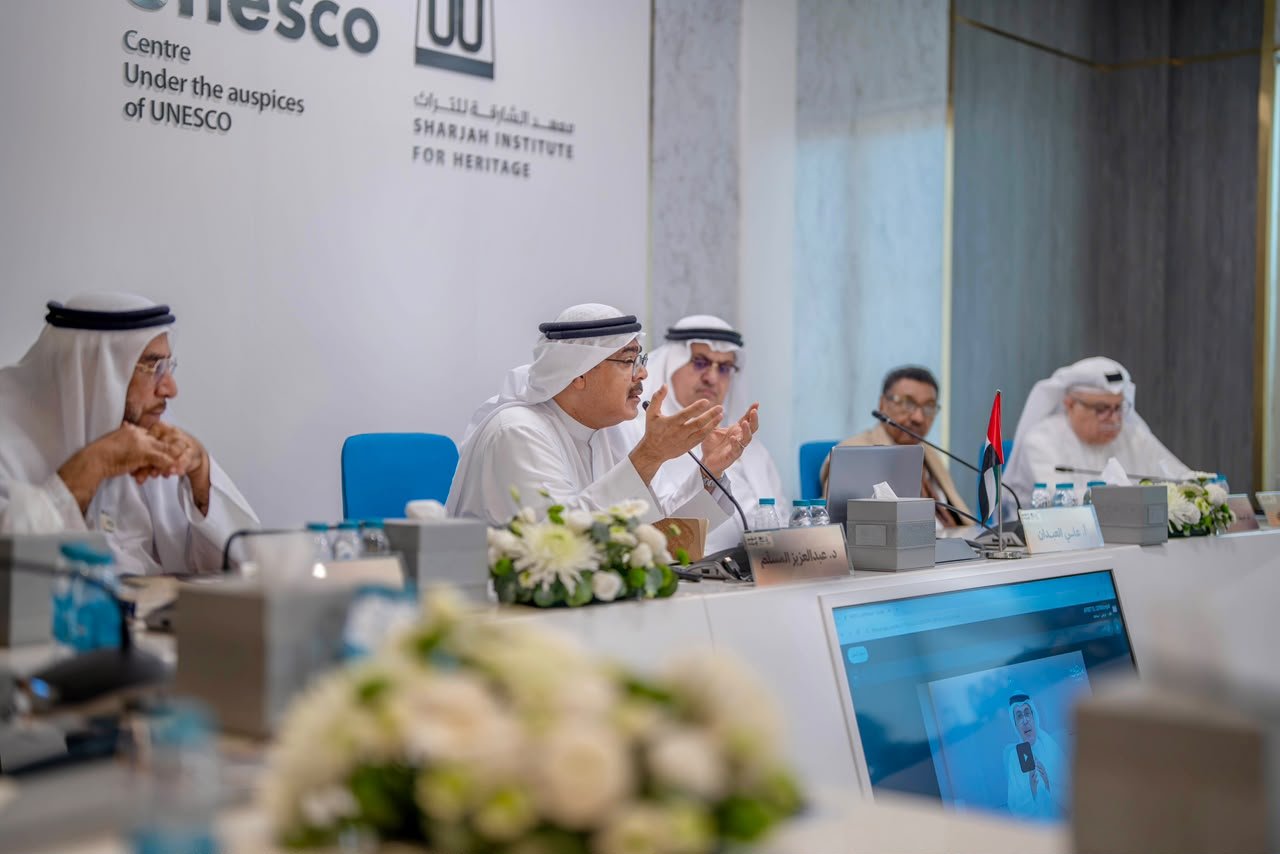
The sixth session, chaired by Ali Al Abdan, featured a keynote paper by Dr. Abdulaziz Al Musallam, President of the Sharjah Institute for Heritage and Chairman of the Conference.
His presentation examined mythical creatures in Emirati folklore through both oral narratives and written documentation, introducing the documentation of approximately 37 legendary beings preserved within the Emirati folk tradition. Dr. Al Musallam explained that the research traced the historical origins of these figures, linked them to their cultural environments, and compared them with classical Arabic literary sources. Supported by scholarly analysis and original illustrations, the study seeks to revive these legendary characters as enduring elements of the UAE's cultural memory.
Arab Perspectives on Documentation and Cultural Preservation
Dr. Sayed Hamed Horiz reviewed Sudan's historical contribution to the formation of Arab oral traditions while examining the social transformations that have influenced its cultural heritage. His paper presented an overview of Sudan's historical development before focusing on the profound social changes witnessed in several regions in recent years.
Researcher Mohammed Saeed Al Balushi discussed the state of oral traditions in Qatar amid rapid social and technological change, while Dr. Saif Al Badwawi examined the evolution of geographical place names from oral usage to officially documented geographical records.
Oral Traditions, Cultural Memory and Identity
The seventh session, chaired by Aisha Al Hessan, Director of the Arab Heritage Centre at the Sharjah Institute for Heritage, explored oral traditions as a fundamental pillar of safeguarding intangible cultural heritage.
Dr. Ahmed Al Naqbi examined the relationship between oral traditions and intangible cultural heritage, while Noura Al Kindi discussed oral traditions as repositories of cultural memory that reinforce community identity. Dr. Adi Ould Adab presented an analysis of Hassaniya proverbs in Mauritania and neighbouring regions as expressions of collective identity, and Mariam Al Mazrouei highlighted the cultural significance of water heritage and the traditional Aflaj irrigation system as integral components of environmental and cultural heritage.
Safeguarding Oral Heritage in the Digital Age
Chaired by Khadija Al Balushi, the eighth session focused on the opportunities and challenges presented by the digital era.
Dr. Hafsa Aaboud explored the impact of digital algorithms on traditional medicine in northern Morocco, while Dr. Afaf Abdel Hafiz of Sudan examined digital transformation and the risks associated with the unauthorized exploitation of oral heritage, outlining policy frameworks and protection mechanisms.
Fahd Al Maamari presented practical models and internationally recognized approaches for safeguarding and preserving intangible cultural heritage.
Digital Archiving and Sustainable Heritage Preservation
The ninth session, chaired by Talal Al Rumaidhi, concentrated on documentation and digital archiving as essential tools for safeguarding intangible cultural heritage.
Khalid Al Budoor reviewed the UAE's experience in heritage archiving and the challenges facing documentation initiatives. Dr. Wadha Hamdan examined the relationship between Emirati artistic practice and oral traditions in the age of algorithms, while Dr. Marima Al Maliki concluded the session with a paper presenting oral traditions as an integrated system for generating, preserving and sustaining intangible cultural heritage.
New Heritage Publications Launched
Alongside the scientific sessions, the conference witnessed the launch and signing of three new publications:
- Religious Proverbs in Kuwait, by Talal Al Rumaidhi.
- Popular Proverbs and Riddles.
- A Report on the Tribes and Ports of the Arabian Gulf Coast and Other Writings, authored by Dr. Issa Amin and edited by Dr. Mohammed Louri.
The second day's discussions reaffirmed the importance of developing innovative approaches to documenting oral heritage and harnessing digital technologies to preserve, disseminate and sustain intangible cultural heritage for future generations.
The conference will continue on Thursday with a new series of academic and panel sessions, accompanied by the launch and signing of additional heritage publications