


Sharjah Institute for Heritage celebrates “World Heritage Day” with a cultural program inspired by the aesthetics of human heritage
In a vibrant cultural atmosphere, the Sharjah Institute for Heritage organized a distinguished celebration on Thursday morning on the occasion of “World Heritage Day,” reflecting its firm commitment to safeguarding cultural heritage and strengthening its presence in public awareness through a diverse program that highlighted the richness of human heritage and its civilizational dimensions.
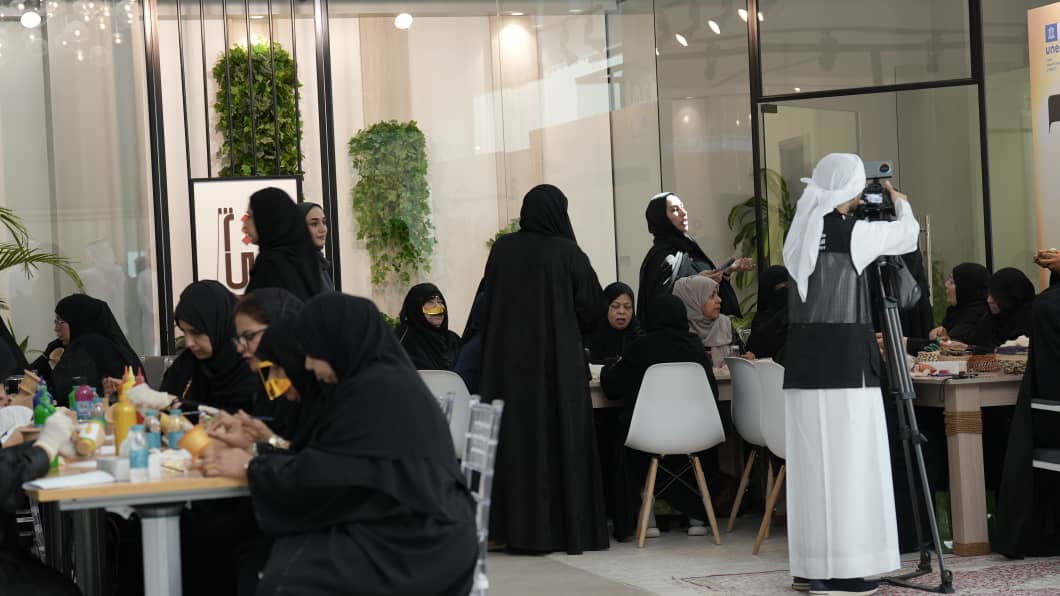
The celebration, held at the Institute’s headquarters in University City, witnessed a notable turnout of heritage and culture enthusiasts. The program featured a range of activities that showcased the beauty and authenticity of heritage within a framework reflecting cultural and human diversity.
Dr. Al Musallam: Heritage is the memory of nations and Sharjah’s renewed message
On this occasion, Dr. Abdulaziz Al Musallam, Chairman of the Sharjah Institute for Heritage, stated that celebrating World Heritage Day represents an important milestone in raising awareness of cultural heritage as the memory of nations and the essence of their identity. He emphasized that it is a shared human legacy that requires international cooperation for its preservation and protection.
He highlighted the leading role of the Emirate of Sharjah in safeguarding heritage and passing it on to future generations, noting that the Institute continues its efforts to preserve, promote, and expand partnerships, while linking heritage to contemporary issues to ensure its sustainability.
Dr. Al Musallam also pointed to the Institute’s ongoing programs and events such as “Sharjah Heritage Days,” “Al Rawi Program,” and “Heritage Nights,” in addition to its national and religious participations, which strengthen society’s connection to its cultural roots. He further affirmed that the Institute enhances its local and international presence through its events, initiatives, and academic publications, as well as through building academic partnerships with institutions inside and outside the UAE, reinforcing Sharjah’s position as a global center for culture and heritage.
Al Kindi: The celebration reflects the Institute’s commitment to preserving cultural heritage
In this context, H.E. Abu Bakr Al Kindi, Director of the Sharjah Institute for Heritage, stated that the Institute marks this global occasion, which falls annually on April 18, emphasizing that the celebration reflects its commitment to preserving cultural heritage, safeguarding national identity, and strengthening its presence in society.
He explained that this year’s event highlighted “Kohl,” which is inscribed on UNESCO lists, as the central theme of the activities due to its deep cultural and aesthetic significance. He noted that the program included live workshops demonstrating traditional kohl preparation methods and stages, reflecting the richness and authenticity of this heritage element.
A dialogue session highlighting Arabic kohl
The program also included a dialogue session titled “Kohl: The Beauty of the Eye and Eye Health,” presented by media professional and heritage researcher Abdullah bin Nasser Al Dhahli from the Sultanate of Oman, with the participation of a group of specialists. The session was moderated by Ms. Aisha Ghabash, Director of Events and Activities at the Institute. It addressed the historical, health, and aesthetic dimensions of kohl in Arab and Gulf culture.
Sharjah’s efforts in preserving heritage
During the session, Al Dhahli praised the efforts of the Emirate of Sharjah and the support of His Highness Sheikh Dr. Sultan bin Muhammad Al Qasimi, Supreme Council Member and Ruler of Sharjah, in promoting and safeguarding heritage. He also commended the pioneering role of the Sharjah Institute for Heritage in preserving and enhancing cultural heritage.
He reviewed the history of kohl and its use among Arabs for thousands of years, highlighting its importance for eye health and protection, as well as its aesthetic value. He also noted its significance in Omani heritage, where it is used by both men and women. He further discussed its inclusion on UNESCO’s list in 2025, along with traditional production stages and types such as whale or shark liver kohl and frankincense kohl.
Kohl in Gulf heritage
Researcher Fatima Al Mughni affirmed that kohl is a shared element in the heritage of Gulf countries and holds great importance in human life, both medically and aesthetically. She explained traditional methods of preparation and its use in certain treatments, including mixing it with rainwater or Zamzam water.
She also highlighted its use for newborns, the variety of its tools—especially the “maraoud”—noting that the sea was a primary source for some types. She added that ithmid kohl is considered one of the finest types and is also used in treating night blindness.
The symbolism of kohl between past and present
Writer Rashid Al Nuhum discussed the role of kohl in the past and present, noting its presence in daily life and its use by men at certain times. He reviewed its production methods, types, and colors, explaining that it was imported from regions such as Isfahan, Morocco, and various Asian countries.
He emphasized its health and aesthetic importance and its symbolic representation of authenticity and the legacy of ancestors, in addition to discussing the “maraoud” tool and its uses.
Arabic kohl workshops reflect the richness of cultural heritage
In her statement, Ms. Marwa Al Mazmi, Head of Internal and External Events at the Sharjah Institute for Heritage, explained that the event featured craftswomen who presented live demonstrations of kohl production, including grinding stages and traditional preparation methods.
She added that a dedicated section showcased Emirati kohl-making, alongside specialized workshops introducing Arabic kohl and its uses.
A program that promotes awareness of human heritage
This celebration comes as part of the Sharjah Institute for Heritage’s efforts to highlight the importance of heritage as a cornerstone of cultural identity and a platform for intergenerational dialogue, contributing to the consolidation of values associated with human heritage and its transmission to future generations using contemporary approaches.