


SIH Discusses Legal, Legislative, and Institutional Frameworks for Protecting Heritage During Times of Crisis
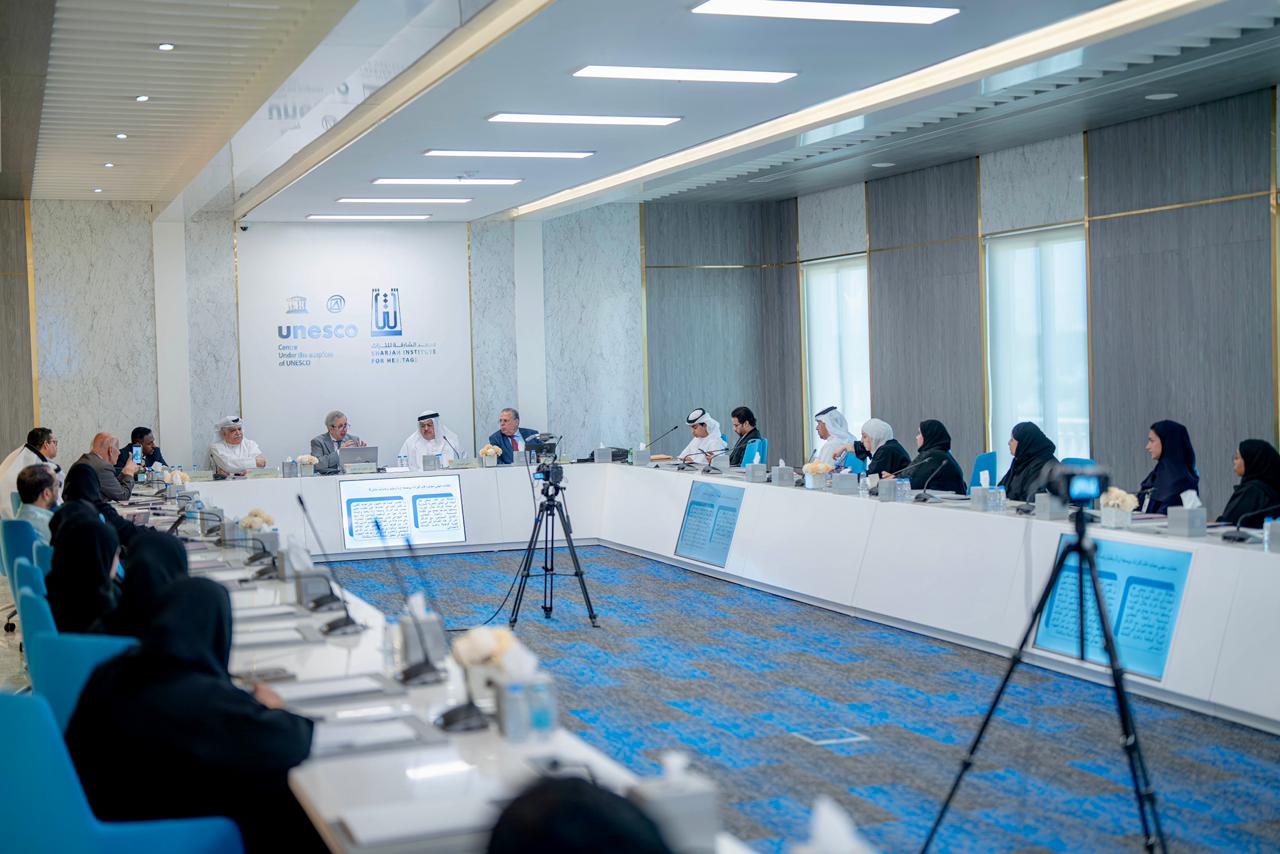
The specialized scientific symposium titled “Best Practices in Cultural Heritage – Heritage Management in Times of Crisis” continued at Sharjah Institute for Heritage, with the participation of a distinguished group of Arab academics, researchers, and experts interested in cultural and heritage affairs. Throughout its multiple sessions, the symposium addressed the most significant challenges facing cultural and natural heritage amid crises and conflicts, while also reviewing the latest practices and mechanisms aimed at protecting, preserving, and rehabilitating heritage sites and assets.
Threats Facing Heritage During Times of Crisis
The second session, moderated by Professor Ali Al-Abdan, featured extensive discussions on the risks threatening cultural and natural heritage during crises, including destruction, looting, and the illicit trafficking of cultural property. Participants included Mohammed Al-Balushi, Professor Mamoun Abdulkarim, Dr. Asaad Abdulrahman, and Engineer Dr. Munther Jumhawi.
The session explored mechanisms for managing archaeological and urban heritage sites during wars and crises, as well as ways to mitigate damage before and during emergencies. Speakers emphasized the importance of digital documentation of heritage as a vital tool for preserving cultural memory. Participants also discussed several challenges related to inadequate preparedness for crises and stressed the need to develop proactive plans to safeguard cultural heritage.
Modern Technologies and Artificial Intelligence
The third session, moderated by Dr. Salem Al Tunaiji, was titled “Protecting Cultural and Natural Heritage in the Age of Modern Technologies: Reality and Prospects.” Participants included Dr. Al Hassan Taouchikht from Morocco, Dr. Saleh Al-Luhaibi, Professor Massoud Idris, and Professor Ali Al-Abdan.
The session examined the impact of modern technologies—particularly artificial intelligence—on heritage, language, and cultural identity. Speakers highlighted the growing dominance of foreign languages in digital applications and the resulting decline of the Arabic language within AI technologies. They noted that this trend negatively affects the quality of Arabic digital content and applications, while also influencing the development of critical thinking and independent creativity among younger generations.
The discussion also addressed the potential of modern technologies in serving cultural and natural heritage, particularly in the fields of preservation and documentation.
Reconstruction and Institutional Rehabilitation
The fourth session focused on institutional best practices for protecting cultural and natural heritage through preservation, reconstruction, and rehabilitation efforts. Participants included His Excellency Abu Bakr Al Kindi, Director of the Institute, Dr. Fatima Al Maamari, Nasser Al Darmaki, and Mohammed Al-Balushi. The session was moderated by Dr. Khalid Al Shahi.
Discussions centered on the importance of institutional and legislative integration, as well as the exchange of expertise among heritage-related entities. The session also emphasized the need to develop rehabilitation plans for damaged heritage sites and strengthen the sustainability of cultural and natural heritage in the face of various crises and disasters.
A Leading Role in Heritage Protection and Preservation
The two-day symposium, held on May 13–14, represented a significant step toward preserving cultural and natural heritage and protecting humanity’s collective memory from the effects of crises, wars, and disasters. It reaffirmed the pioneering role of Sharjah Institute for Heritage and its ongoing efforts to promote scientific research, exchange expertise, and develop mechanisms for preservation, documentation, and rehabilitation in order to safeguard cultural heritage.
The symposium also stressed the importance of establishing sustainable precautionary and preventive measures to ensure the protection of cultural and natural heritage as a fundamental pillar of human identity and a bridge connecting the past, present, and future. Participants further called for the enactment of protective laws and legislation, as well as the activation of relevant international legal frameworks in this field.