

Enrich the Cultural Landscape at Sharjah International Book Fair with Intellectual Sessions and Distinguished Publications
 Sharjah Institute for Heritage
As part of the 45th edition of the Sharjah International Book Fair, held under the theme “Made of Stories,” the Sharjah Institute for Heritage continued its distinguished cultural and intellectual presence through two scholarly and intellectual dialogue sessions, bringing together a select group of academics, researchers and specialists. The sessions attracted a gathering of intellectuals, heritage and culture enthusiasts, and exhibition visitors, alongside the signing of a new heritage publication as part of the Institute’s accompanying programme.
Folk Narratives: From Collective Memory to Contemporary Fiction
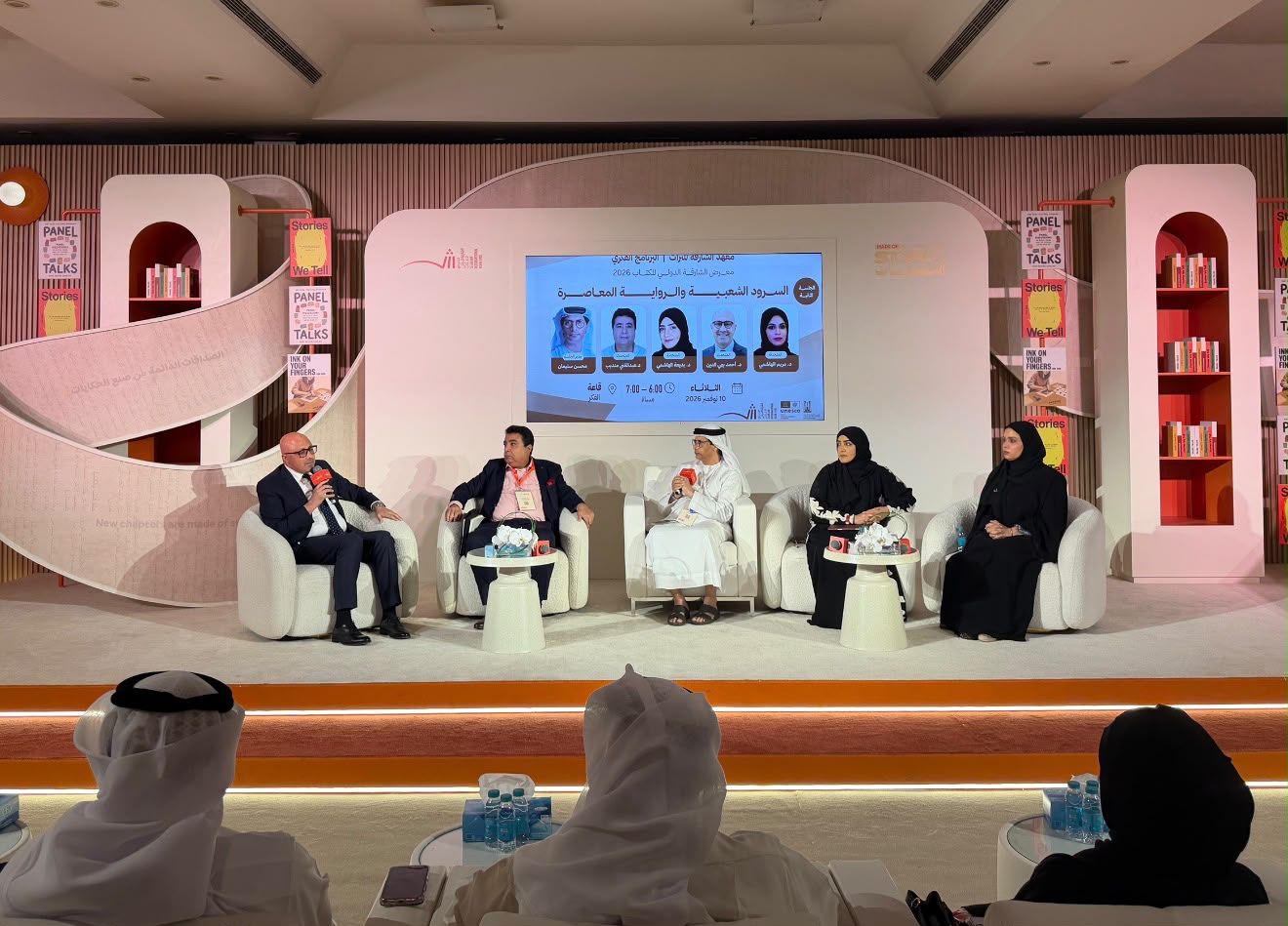
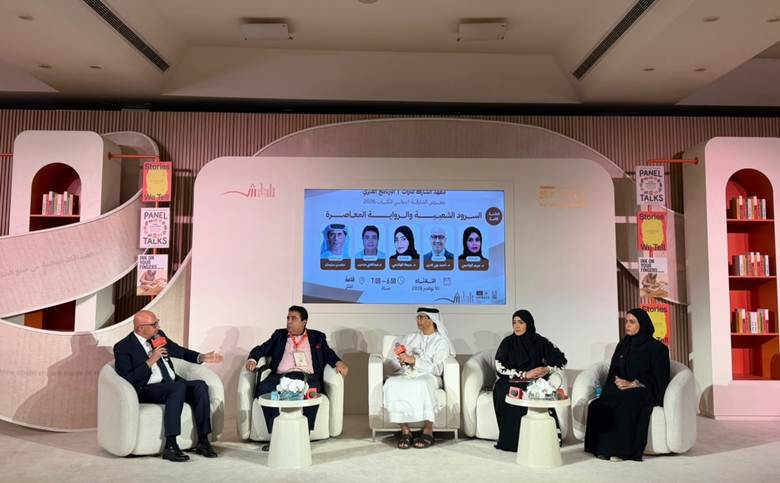
In this context, the Institute organised a dialogue session entitled “Folk Narratives and Contemporary Fiction,” which explored the relationship between traditional folk narratives and modern literary writing. The session examined how folk tales, myths and popular biographies can inspire contemporary literary works and be reinterpreted within new creative contexts.
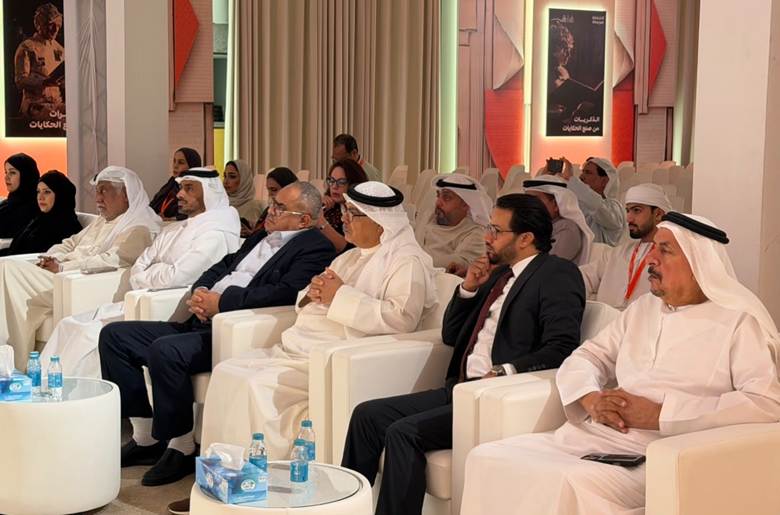
The session was attended by H.E. Dr Abdulaziz Al Musallam, Chairman of the Institute, and H.E. Abu Bakr Al Kindi, Director of the Institute, alongside a number of intellectuals, researchers and interested visitors.
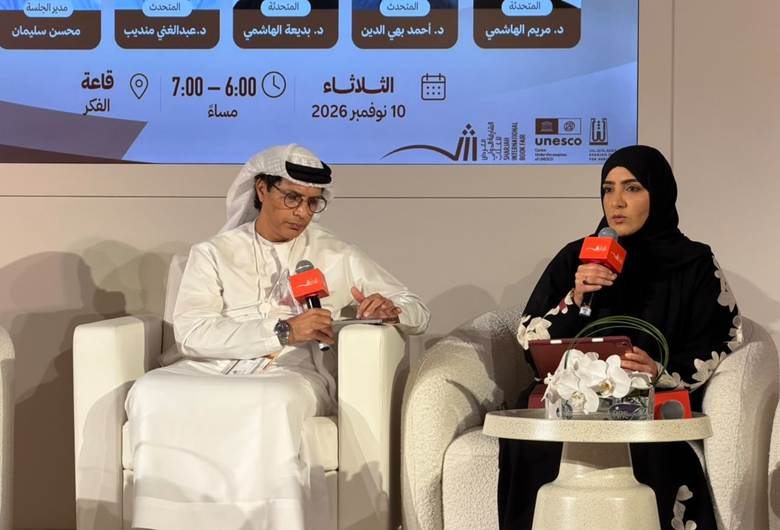
Moderated by writer and researcher Mohsen Suleiman, the session featured Dr Ahmed Bahi El-Din, Dr Abdulghani Dunaib, Dr Badia Al Hashemi and Dr Maryam Al Hashemi. Participants discussed the relationship between folk narratives as a living repository of collective memory and contemporary fiction, which draws upon this heritage and reinterprets it through new creative perspectives.
The discussions explored the presence of folk tales, myths, biographies and inherited narratives in modern fiction, and their transition from oral storytelling and community circulation into literary texts that address contemporary visions and questions. They also examined the narrative techniques that novelists draw from folk heritage, including character development, multiple narrative voices, and the use of memory, symbolism and cultural references.
Literary Integrity and the Preservation of Cultural Memory
The session also addressed the writer’s responsibility when engaging with traditional narratives, highlighting the importance of balancing the preservation of their authenticity and cultural identity with the demands of literary innovation and renewal. Participants stressed the need to safeguard the original meanings and symbolism of folk tales when reintroducing them to younger generations.
Proverbs and Popular Expressions: The Memory of the UAE and the Wisdom of Generations
In a second dialogue session entitled “Popular Proverbs and Expressions,” the Institute highlighted the richness of Emirati proverbs and traditional expressions and their significance in preserving cultural memory and community identity. These expressions represent a distillation of human experience and reflect the intellectual and cultural maturity of societies, transmitting accumulated knowledge and wisdom from one generation to another.
The session was moderated by poet Sheikha Al Matrooshi, with the participation of Emirati proverbs expert Khamis Ismail Al Matrooshi and Emirati folk heritage researcher Fahad Al Maamari.
The speakers explored the prominent place of popular proverbs in Emirati culture, considering them among the clearest manifestations of the intellectual and social development of Emirati society in previous decades. They also discussed the diversity of Emirati proverbs and their close connection to the country’s different environments, including desert, coastal and mountainous settings, highlighting the expressive imagery and meanings that reflect the nature of life in each environment, as well as the experiences, knowledge and inherited traditions they have produced.
Documentation: A Shared Responsibility Across Institutions and Generations
The discussions emphasised that proverbs and popular expressions constitute a valuable cultural and intellectual legacy that deserves preservation, given the social values, human wisdom and knowledge they embody, all of which are closely linked to the history of Emirati society and the distinctive characteristics of its environment.
The session highlighted the importance of documenting popular proverbs and expressions, preserving their narratives, contexts and meanings, and protecting them from disappearing. This requires coordinated efforts among institutions and organisations concerned with safeguarding heritage, foremost among them the Sharjah Institute for Heritage, the Hamdan bin Mohammed Heritage Center, the Ministry of Culture and other relevant entities, ensuring the continuity of this legacy and its accessibility to future generations.
“Al-Madima”: A Publication Documenting the Legacy of Swahili Performing Arts
As part of the Institute’s intellectual and scholarly publishing programme, its pavilion hosted the signing of “Al-Madima” by author Rostum Mohammed Koboa. The book explores a traditional dance rooted in Swahili culture, examining its history, cultural and social origins, and heritage significance.
The publication focuses on the Al-Madima dance, known in East Africa as “Musundo,” which is associated with Lamu Island, part of the Lamu Archipelago off the northern coast of Kenya. The dance represents an important form of artistic and cultural expression among Swahili communities.
The book traces the dance’s origins and historical development, as well as its transmission and spread across several Arab Gulf countries, including the UAE, Oman, Bahrain and Kuwait, in addition to Egypt and parts of Yemen
Maritime Vocabulary in Pre-Islamic Arabic Poetry
The Institute’s pavilion also hosted the signing of “A Dictionary of Maritime Vocabulary in the Poetry of Pre-Islamic Poets” by Dr Sultan Al Ameemi. The publication documents maritime terms found in pre-Islamic Arabic poetry, revealing important aspects of the historical relationship between Arabs and the sea.
It explores vocabulary relating to ships, maritime professions, marine creatures and coastal locations, as well as tribes and families whose lives were connected to the sea through trade and settlement.
Al Ameemi explained that the dictionary opens new horizons for specialised research into the historical relationship between Arabs and the sea. He also noted that it represents his fourth publication in collaboration with the Sharjah Institute for Heritage, following three previous titles.
Sheikh Mubarak bin Saif Al Nakhi (1900–1982): A Pioneer of Intellectual and National Awakening in the Arabian Gulf
The Institute’s pavilion also witnessed the signing of “Sheikh Mubarak bin Saif Al Nakhi: A Pioneer of Intellectual and National Awakening in the Arabian Gulf (1900–1982),” authored by Sheikha Mubarak Saif Al Nakhi and published by the Institute.
The book presents a comprehensive documentary biography of one of the prominent figures in the history of Emirati thought and culture.
Across several chapters, the publication explores Sheikh Mubarak bin Saif Al Nakhi’s upbringing, social life and commercial activities, highlighting the Sharjah town of Al Heera as a centre of intellectual activity and a meeting place for poets. It also examines his role as a teacher and educator and his contributions to intellectual and national advancement.
Furthermore, the book documents his relationships with the Rulers of the Emirates, Arab thinkers, intellectuals, scholars and literary figures, alongside his correspondence and cultural and intellectual exchanges. It also features selected articles published in the Arab press and testimonies from his contemporaries, offering a comprehensive portrait of his life and standing as one of the pioneers of cultural and national awareness in the Arabian Gulf.
A Cultural Programme Strengthening Heritage’s Presence in the Intellectual Landscape
These activities reflect the diversity of the scholarly and cultural programme presented by the Sharjah Institute for Heritage during its participation in the Sharjah International Book Fair. By bringing together academic dialogue, research-based documentation and the celebration of heritage publications, the Institute continues to create opportunities for communication and the exchange of expertise among researchers, creative talents and those interested in cultural heritage.
More from the Media Center
News
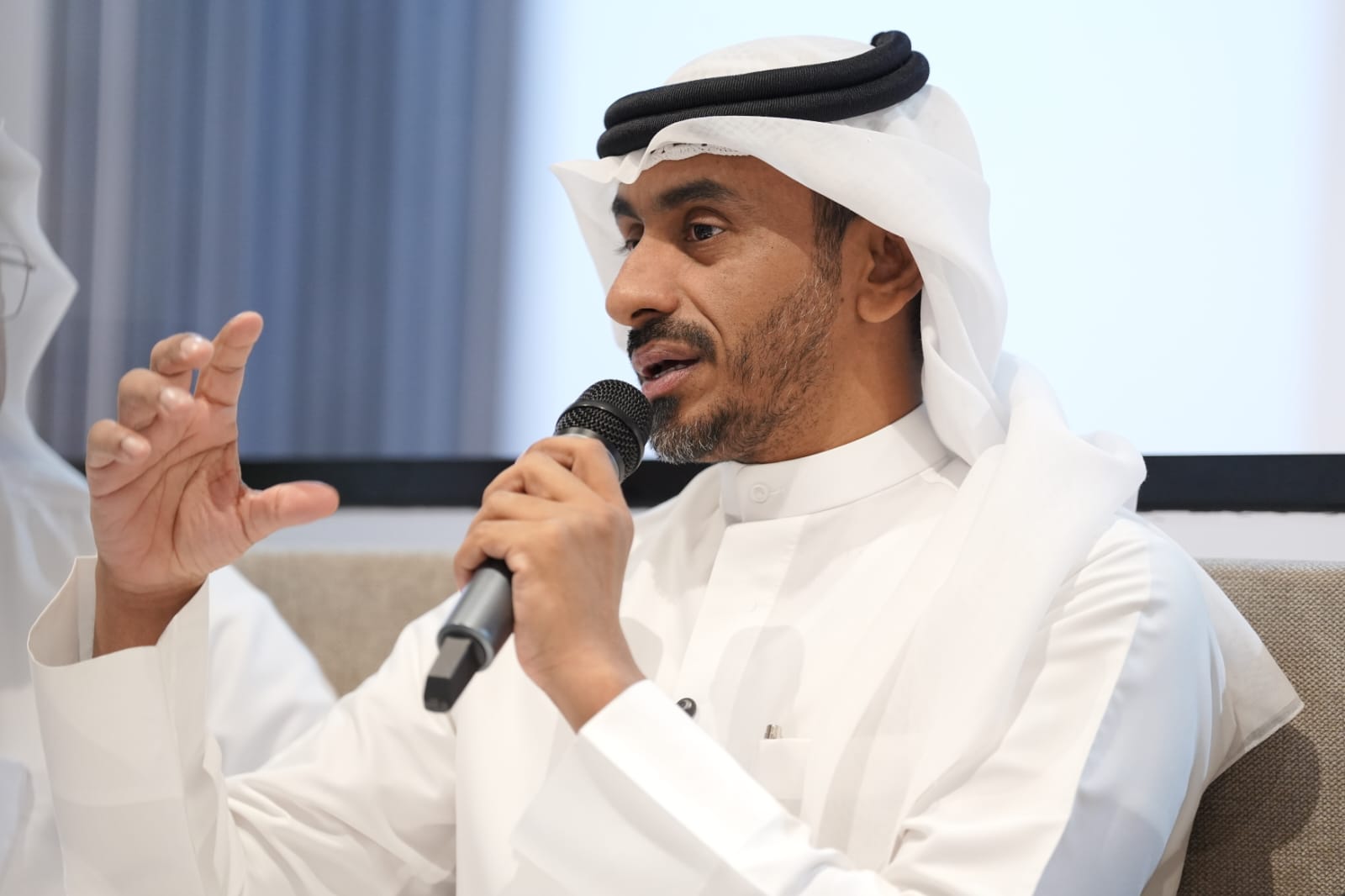
“Documenting Heritage”: A Dialogue Session Exploring the Future of Cultural Memory at Sharjah International Book Fair
Nov 11, 2026
News
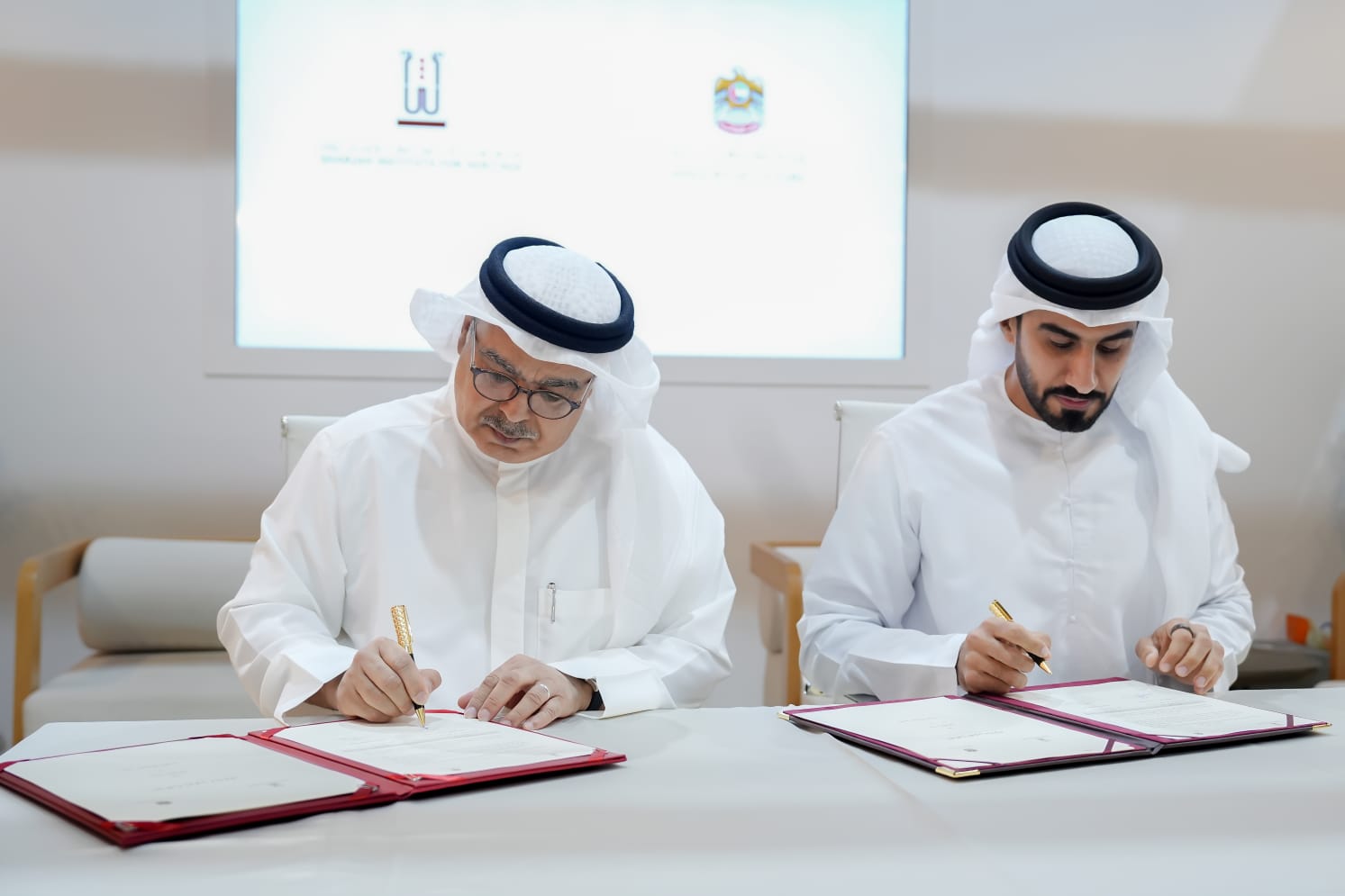
Ministry of Culture and Sharjah Institute for Heritage Sign Cooperation Agreement
Nov 11, 2026
News
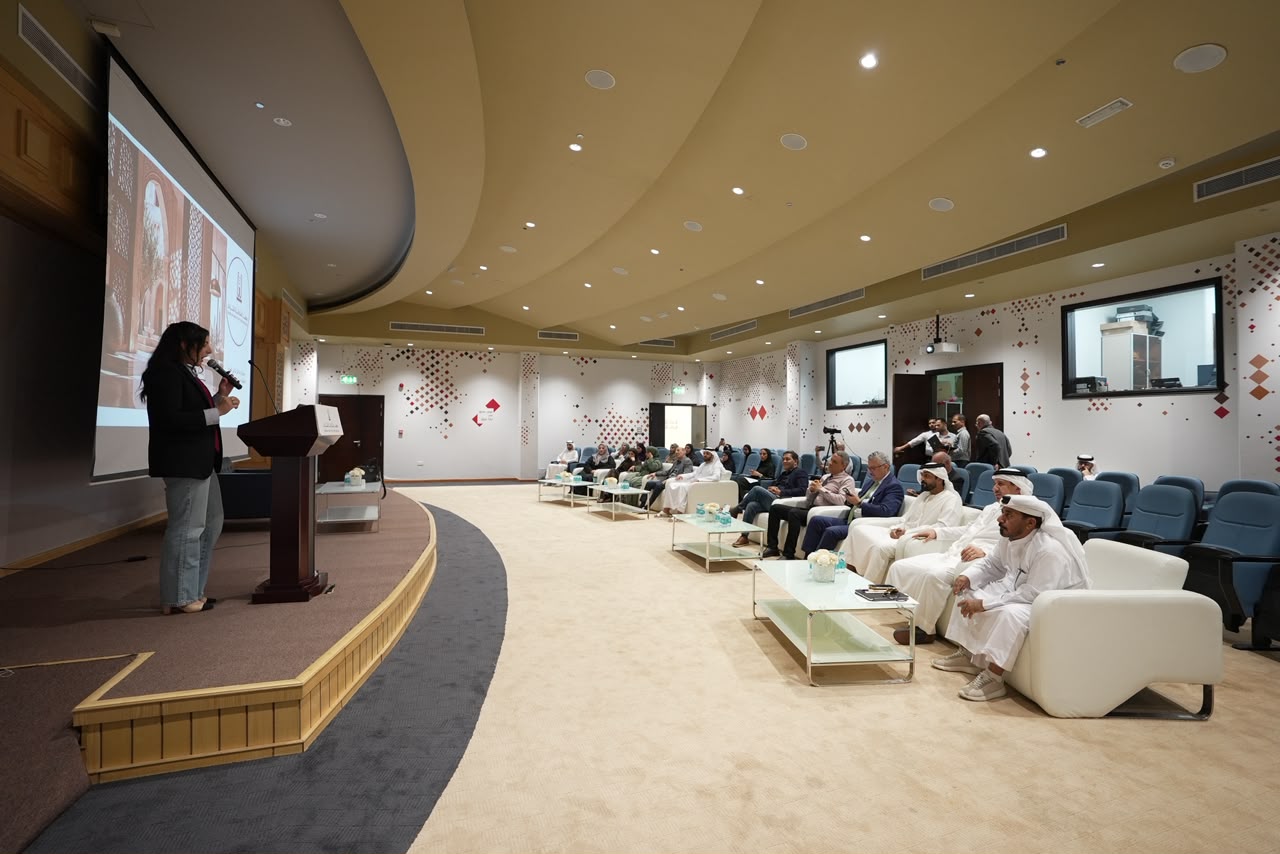
Sharjah Institute for Heritage Explores the Inspiration of Cultural Heritage in Contemporary Interior Architecture Design
Nov 10, 2026
Strategic Contribution
The Media Center strengthens communication, transparency and cultural outreach across audiences.